Category: Business

  • Mira Mehta: turning Nigerian tomatoes into opportunity

    Mira Mehta: turning Nigerian tomatoes into opportunity

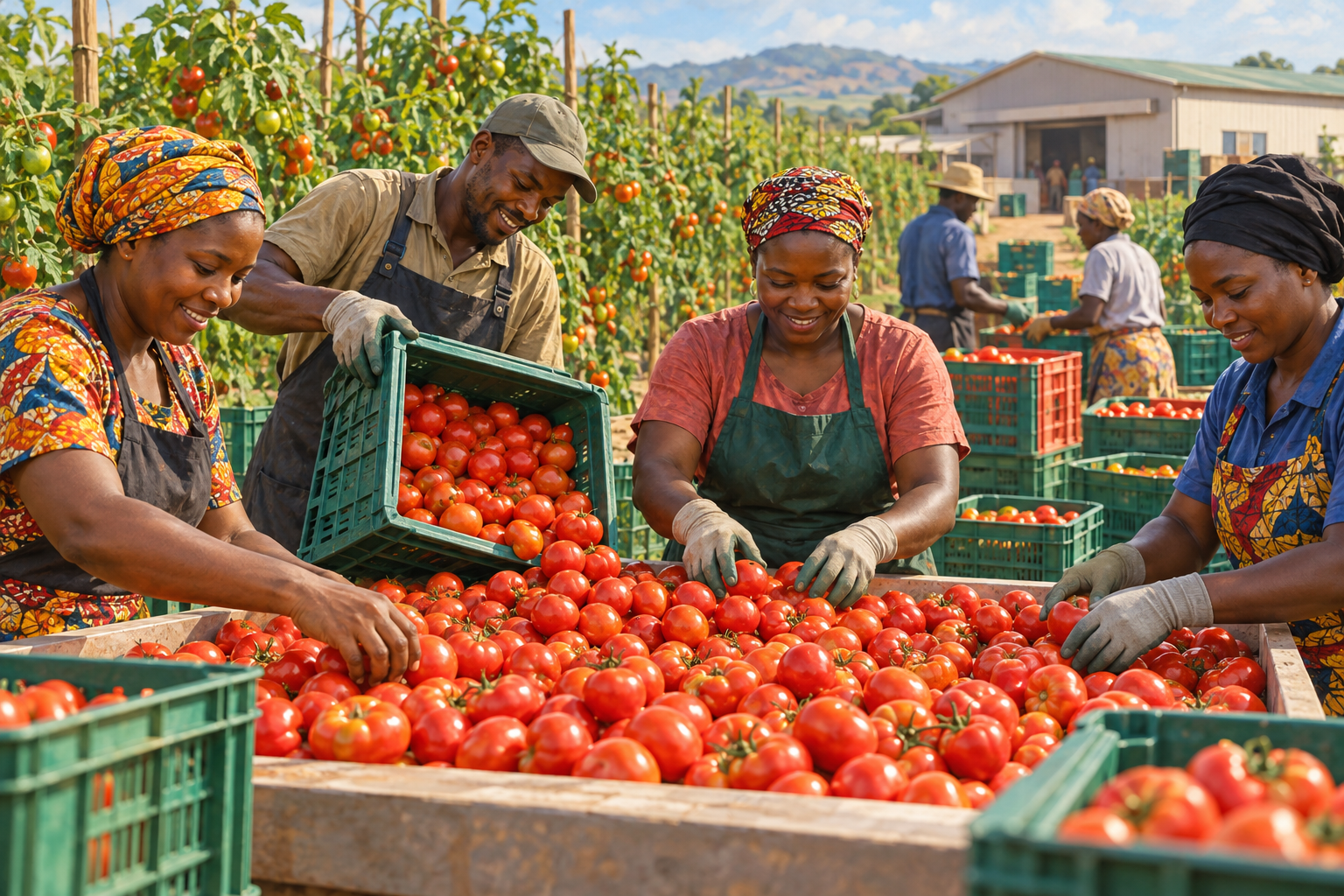
    AI-generated illustration of tomato farming; not a photograph of Tomato Jos, its staff or premises.

    Before Tomato Jos became a food business, it was a question that stayed with Mira Mehta.

    While living and working in Nigeria, she saw tomatoes rotting beside the road. Farmers were growing food, yet some of their harvest was failing to reach a useful market.

    Why couldn’t more of those tomatoes become tomato paste made locally?

    That question eventually became a business. In 2014, Mira and co-founder Shane Kiernan launched Tomato Jos, linking an entrepreneurial idea with an ambition to help smallholder farmers build more profitable livelihoods.

    The journey took patience. The company’s account of its early years describes crop disease and water shortages among the challenges it faced. Growing suitable tomatoes and building a dependable supply chain required more than enthusiasm.

    From its first farming operations in Nasarawa State, the team began putting its idea into practice: support farmers during the growing season, then turn their harvest into a product for Nigerian consumers.

    Today, Tomato Jos operates a farming and processing business in Kaduna State, producing packaged tomato paste for the domestic market.

    Women are an important part of that story. In an investment announcement published by AVCA, Sabou Capital reported that women represented 60% of the company’s smallholder suppliers. Behind the finished product is a network of people whose work begins long before the tomatoes reach the factory.

    A recent development marks another step forward.

    On 22 September 2026, EDFI Management Company announced a $2.5 million AgriFI investment in Tomato Jos. The financing will support packaging equipment, factory upgrades and expanded drip irrigation.

    According to the announcement, more than half of the company’s raw materials come from local smallholder farmers. The planned improvements aim to reduce production costs, broaden its products and deepen its work with farming communities. These are plans for the next stage of growth, rather than results already achieved.

    Mira’s journey shows how an observation can grow into years of practical work. Tomatoes beside a road prompted a question. Building an answer brought together farmers, a processing business and a market for locally made food.

    For MyHappyAfrica, that is a story of progress worth sharing: people finding opportunity in what their communities already produce, and working to make that opportunity last.

    Sources: Tomato Jos; The Harvard Crimson; AVCA/Sabou Capital; EDFI Management Company (22 September 2026).
  • From Tunisia’s plants to the world: a scientist’s new chapter

    From Tunisia’s plants to the world: a scientist’s new chapter

    In 2019, Ibtihel Ben Hadj Mbarek-Fredj took her research in a new direction. After fifteen years at the University of Monastir, the biotechnology researcher moved into business.

    Herbalya Natural Care grew from her work on Tunisia’s medicinal and aromatic plants. According to the African Development Bank’s July 2026 account, its organic cosmetics had reached France, Canada and the United States.

    Building trust, step by step

    Scientific knowledge was only part of the journey. Competing with imported brands meant earning customers’ confidence. Research partnerships and certification helped Herbalya build credibility, while business support helped its founder develop management skills.

    Opportunity beyond the laboratory

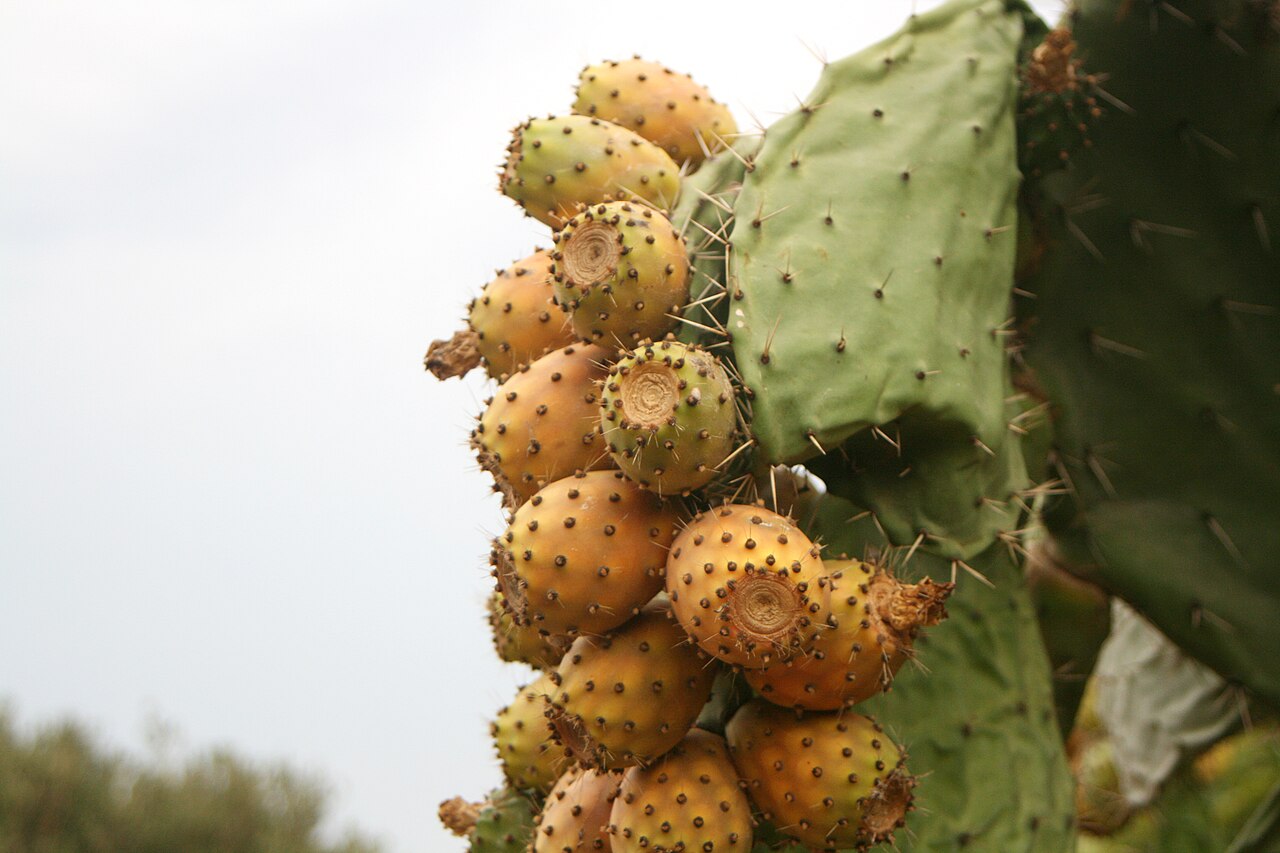
    The company also works with women’s agricultural groups. The reported partnerships involve more than forty women directly and over two hundred people indirectly during the prickly-pear harvesting season. These are people across the supply chain, rather than two hundred permanent factory jobs.

    Herbalya’s next chapter involves seeking support to expand. Its story already offers an encouraging connection between research, local resources and rural livelihoods.

    Her journey began with the plants growing around her. What grows where you live that could inspire someone’s next big idea? Tell us in the comments — we’d love to hear.

    Source: African Development Bank, 3 July 2026.

    Photo: Mohamed Amine Aouina / Wikimedia Commons (CC BY-SA 4.0).

  • How a shea-processing business is creating opportunities for women in Mali

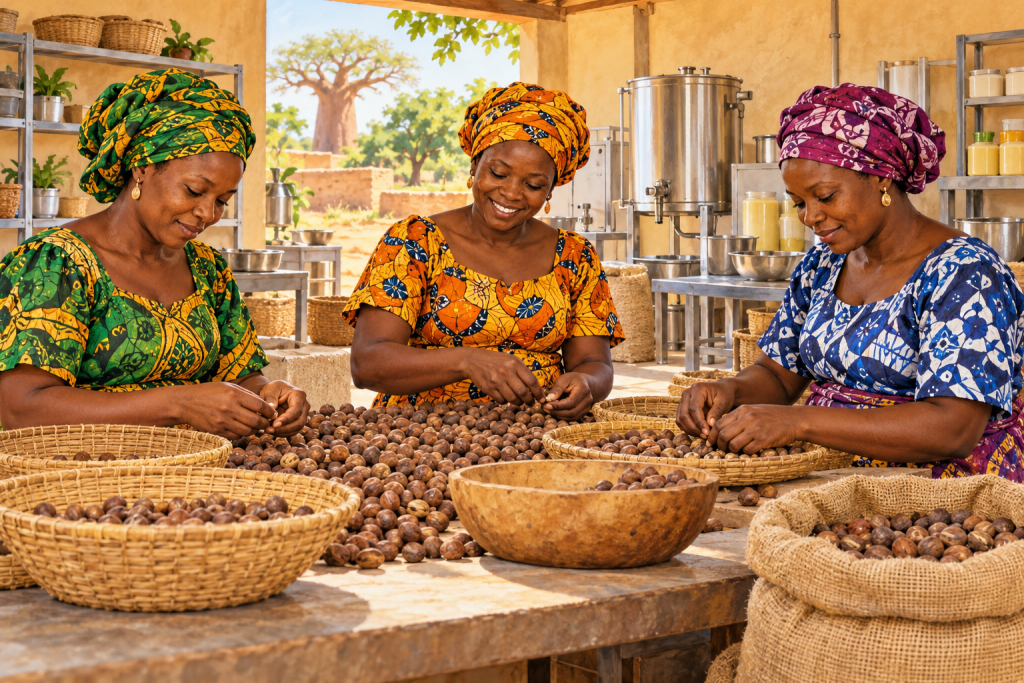
    AI-generated illustration of shea processing. It does not depict Mali Shi’s staff or factory.

    In Mali, Kancou Keita Cissé helped build Mali Shi, a business that processes locally collected shea nuts. Its factory opened in 2020, creating a way to add value to a local resource while supporting jobs and women’s cooperatives.

    In an interview published by Investisseurs & Partenaires in July 2025, Kancou reported that Mali Shi employed 97 permanent staff and around 30 day workers. The company also worked with 12,000 women collecting shea nuts, organized into cooperatives across the Kayes, Koulikoro, Ségou and Sikasso regions.

    According to the same interview, Mali Shi supported these cooperatives through formal purchasing contracts, training in collection and management, and equipment such as transport tricycles and storage facilities. These practical steps helped women organize their work and secure a more reliable buyer for their shea nuts.

    The business also found uses for the material left after processing. Kancou explained that shea cake could be used in animal feed, organic fertilizer and fuel briquettes—creating useful products from what remained of the nuts.

    Mali Shi’s story shows how processing local resources can create opportunities beyond the factory itself. By connecting industry with women’s cooperatives, the business offers an example of entrepreneurship that supports both jobs and rural livelihoods.

    MyHappyAfrica — Real people, Real progress, Real Africa.

    Source: Investisseurs & Partenaires, interview with Kancou Keita Cissé, 7 July 2025. Figures reported in 2025.

    https://www.ietp.com/en/node/4580

  • How a Cameroonian Company Is Using Drones and AI to Fight Waste and Flooding

    In many African cities, plastic waste is more than an environmental problem. When rubbish blocks drains, heavy rainfall can quickly turn into dangerous flooding.

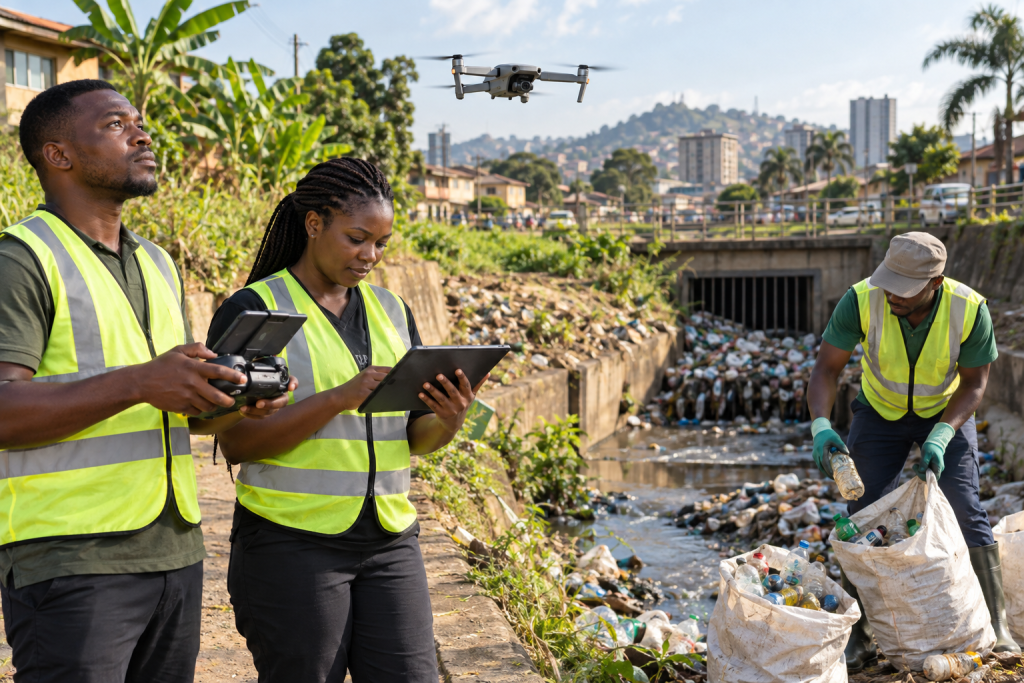
    In Cameroon, BleagLee Waste Management is tackling this challenge with technology. The company uses drones to identify waste hotspots and AI-powered analysis to improve collection planning. This helps teams locate rubbish before it builds up in drains and other high-risk areas.

    The company’s progress shows that waste collection can also become a climate-resilience service. With support from the YouthADAPT programme, BleagLee financed a processing plant, added two collection trucks and trained 200 additional waste pickers.

    According to the African Development Bank, the company expanded its workforce from 31 to 124 people. Its revenue increased by 181%, while the amount of waste it recycled tripled.

    BleagLee has also attracted major support for its work, including US$50,000 from the ClimaTech Run competition, a US$400,000 World Food Programme grant for a project in Dakar, and a US$1 million Milken–Motsepe Prize.

    Its technology is now being used in Dakar to map plastic-waste hotspots and improve collection routes. This demonstrates how a solution developed in Cameroon can be adapted to help other African cities.

    BleagLee’s story is important because it connects three urgent needs: cleaner communities, protection from flooding and employment. It shows that African innovation does not always begin with creating something completely new. Sometimes it begins by using existing technology intelligently to solve a real local problem.

    Real people, Real progress, Real Africa.

    Source: African Development Bank — “From plastic-choked drains to flood-proof cities: BleagLee’s waste-to-resilience transformation in Cameroon.”

    Image: AI-generated illustration by MyHappyAfrica.

  • The Togolese Inventor Making Fufu Easier to Prepare

    In Togo, inventor and entrepreneur Jules Minsob Logou has turned an everyday challenge into an innovative African success story.

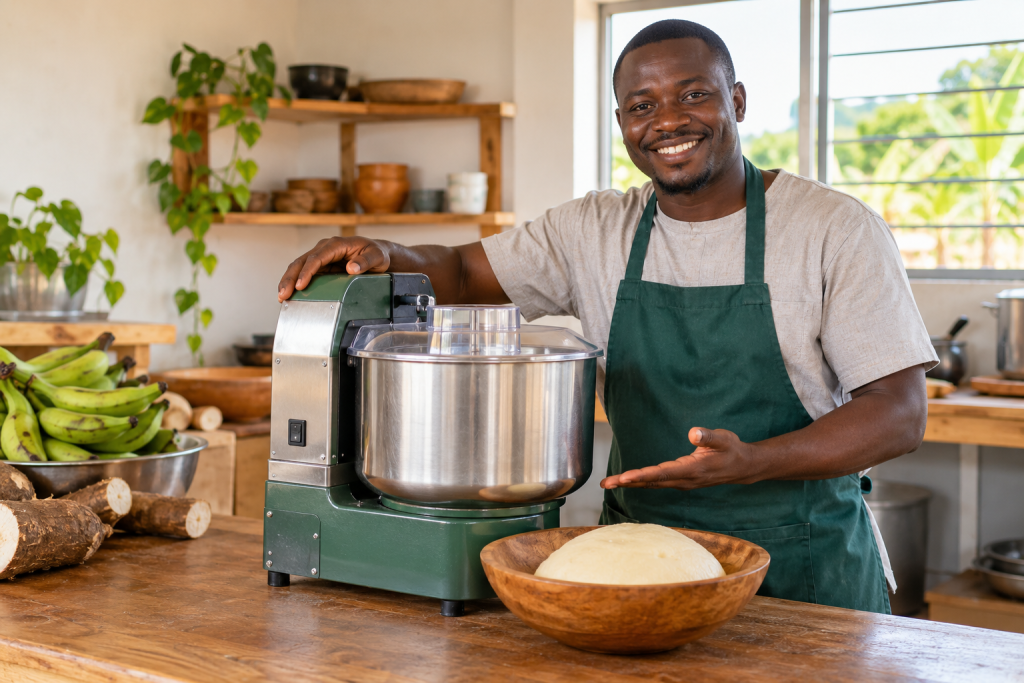
    He created the Foufoumix, a machine that prepares smooth fufu in just a few minutes. The invention reduces the time and physical effort normally required to pound cooked yam or cassava by hand.

    Trained in electrotechnics, Jules develops practical technology suited to African needs. Beyond the Foufoumix, his company has worked on other locally designed equipment, including a small agricultural tractor.

    His innovation has received recognition beyond Togo. In 2014, he won second place at the Innovation Prize for Africa, and the Foufoumix has reached customers in West Africa and abroad.

    Jules Minsob Logou’s journey shows that innovation does not always mean replacing tradition. Sometimes, it means using technology to preserve tradition while making everyday life easier.

    This is African creativity solving an African challenge.

    Real People. Real Progress. Real Africa.

    Sources: Forbes Afrique, Togo First and the official Foufoumix website.

    Image: AI-generated illustration by MyHappyAfrica.

  • From Benin’s Cotton Fields to “Made in Benin” Fashion

    In Parakou, northern Benin, entrepreneur Fatoumata Dosso is showing how local cotton can create fashion, employment and opportunity.

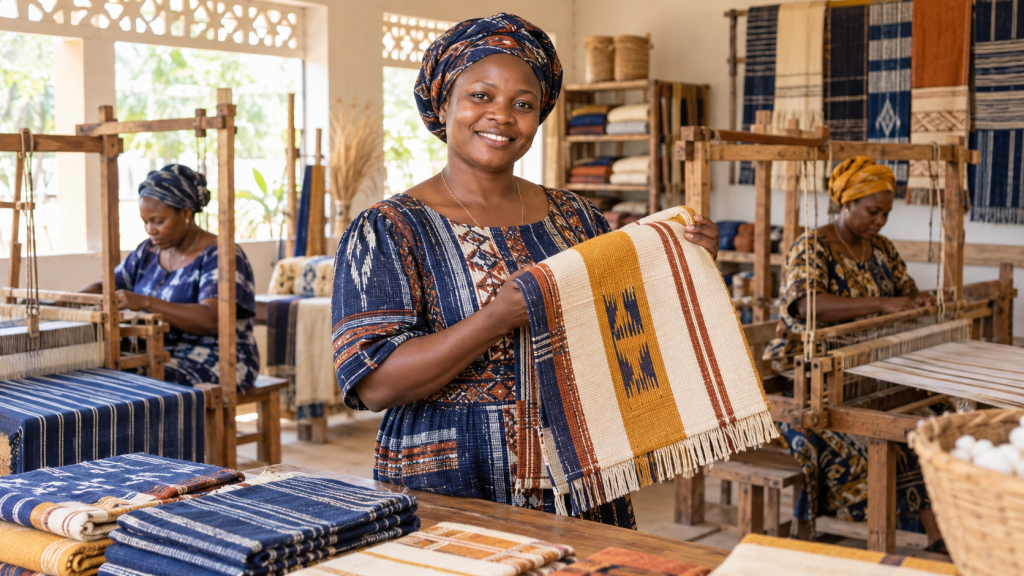
    Through her business, DAF Collection, she transforms cotton into traditional clothing inspired by the culture of northern Benin. Her creations proudly carry the label “Made in Benin.”

    Supporting Women Through Traditional Skills

    Fatoumata works with around twelve women who weave fabric for her collections. By connecting their traditional skills with paying customers, she is helping them turn weaving into a dependable source of income.

    One of the weavers, Chabi Baké, is a mother of five. Her work is providing enough income for her to begin building a home for her family.

    Creating More Value at Home

    Benin is Africa’s largest cotton producer, but much of its cotton has traditionally been exported before being transformed into finished products.

    That is beginning to change. Beninese entrepreneurs and manufacturers are now turning more locally grown cotton into fabric and clothing. The Glo-Djigbé Industrial Zone alone processes around 40,000 tonnes of cotton and produces between seven and ten million garments annually.

    This creates opportunities for farmers, textile workers, designers and small businesses across the country.

    A Proud Beninese Success Story

    Fatoumata’s ambition goes beyond fashion. She is preserving traditional weaving, supporting women and demonstrating the value of transforming African resources within Africa.

    Her journey is a powerful reminder that progress can begin with local materials, traditional knowledge and one entrepreneur determined to create something special.

    This is how Benin is changing—one thread, one skill and one opportunity at a time.

    What other African-made products deserve greater international recognition?

    Source: Associated Press

  • Young Malian Entrepreneur Turns Noni Fruit into Jobs and Opportunity

    Young Malian Entrepreneur Turns Noni Fruit into Jobs and Opportunity

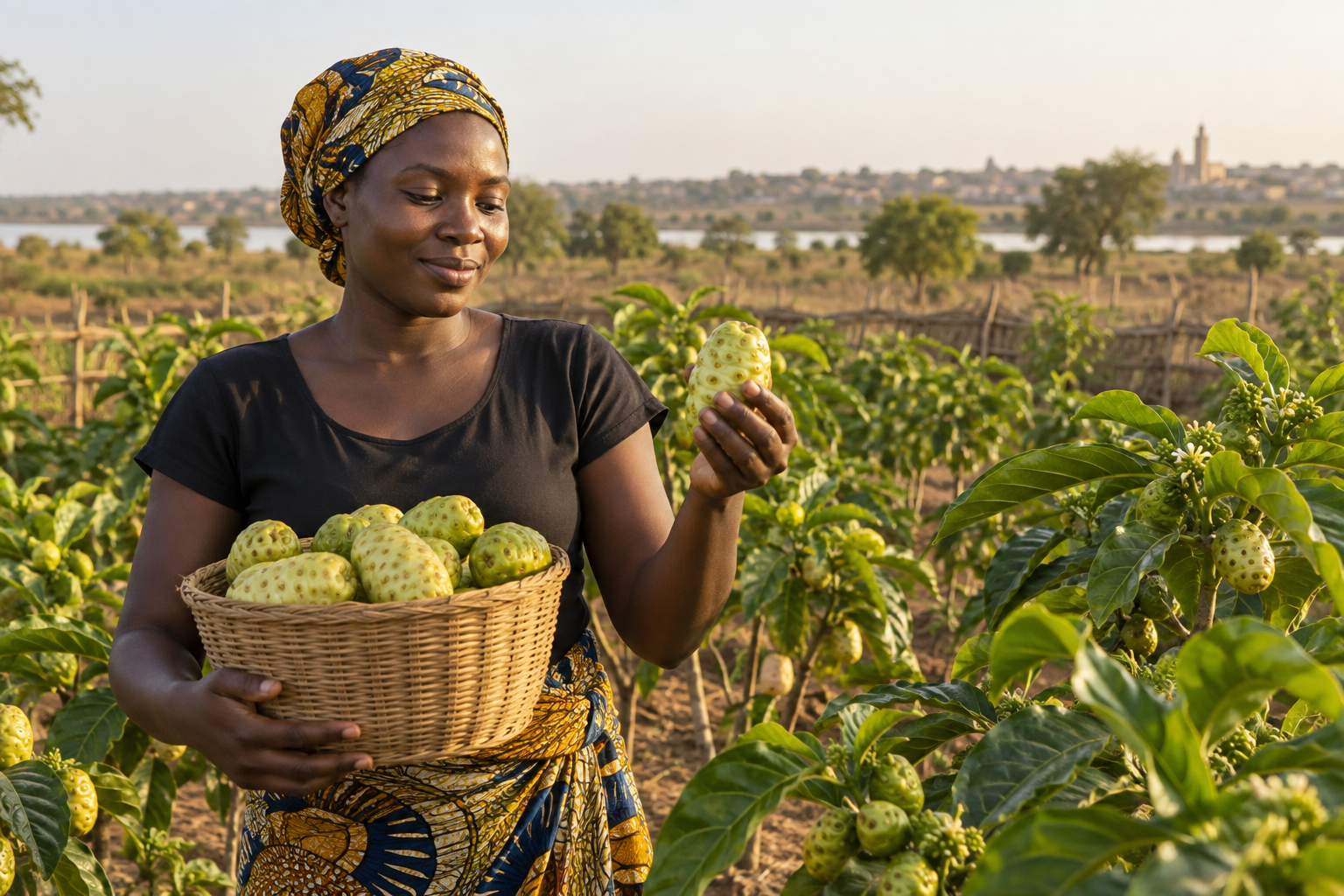
    On a two-hectare farm near Ségou, Mali, Safoura Cissé is transforming an unusual fruit into a growing local business.

    Safoura began working with noni in 2019 and founded Health Secret Mali to cultivate, process and sell products made from the fruit. Her company produces noni juice and powder, adding value to a crop grown locally instead of selling it only as raw produce.

    In 2021, she received $2,500 in seed funding through a youth entrepreneurship programme run by the United Nations Development Programme and the Tony Elumelu Foundation. The support helped her establish a small processing and packaging unit.

    According to UNDP, the business has created five full-time jobs and seven part-time jobs for young people in the community. Safoura has also introduced a micro-jet irrigation system to use water more efficiently and is moving towards fully organic production.

    Her ambition is to expand Health Secret Mali into a major West African noni-processing business powered by renewable energy.

    Safoura’s story shows what positive African progress can look like: local agriculture, entrepreneurship, responsible use of resources and new opportunities for young people.

    Source: United Nations Development Programme

    https://www.undp.org/africa/waca/blog/safoura-cisse-queen-noni-virtuous-agro-industry

  • A South African Apple Farm Is Growing Jobs and Opportunity

    A South African Apple Farm Is Growing Jobs and Opportunity

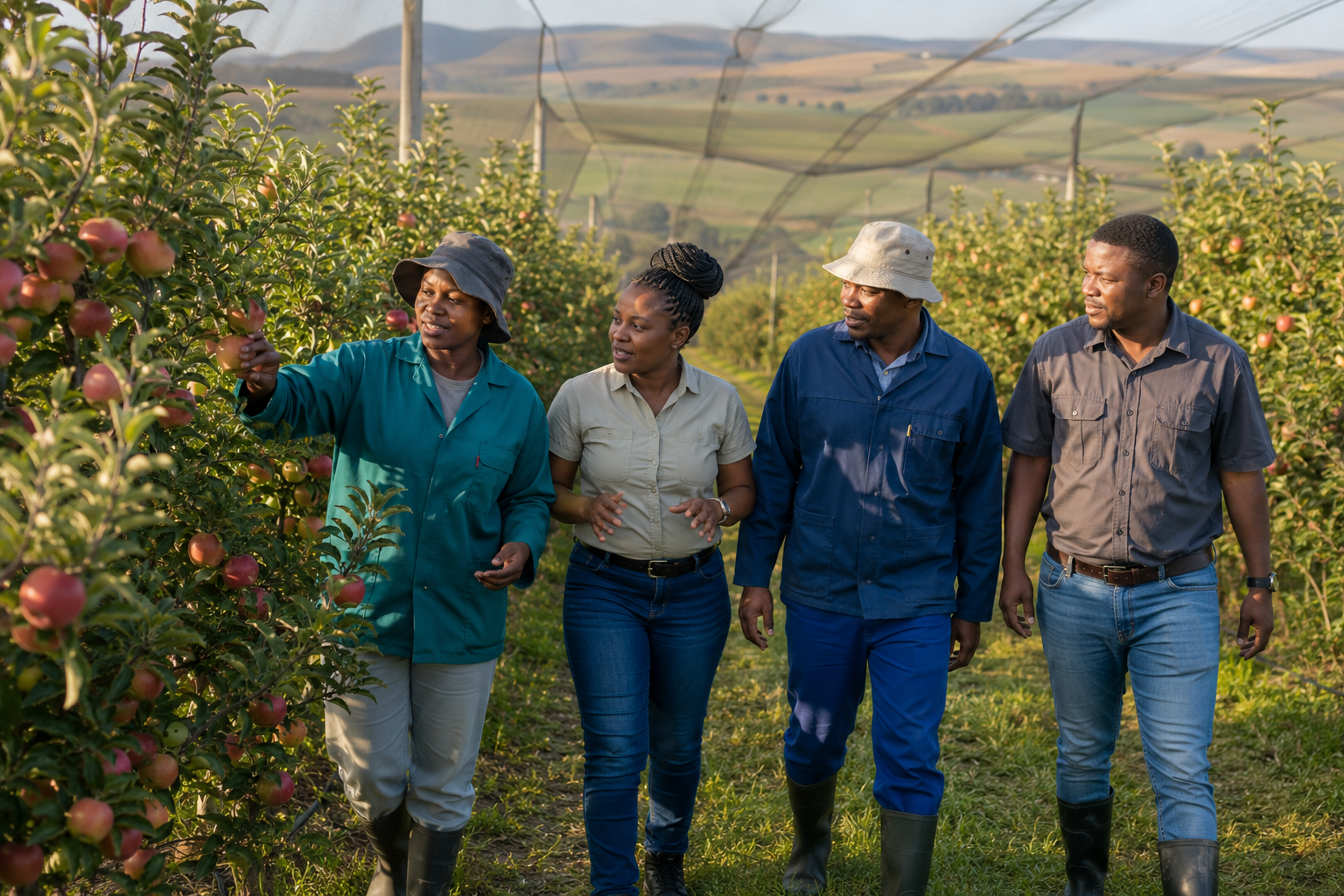
    Near Bethlehem in South Africa’s Free State, an apple-growing partnership is showing how agriculture can create jobs, encourage innovation and open new opportunities.

    Remmoho Investments in Agriculture is a 100% black-owned enterprise led by Pitso Sekhoto. Working in partnership at Stead Farm, the business is developing modern apple orchards and aims to create as many as 500 jobs in the region.

    The newer orchards use improved apple varieties, higher planting density and modern protective netting. By planting approximately 3,300 trees per hectare—almost twice the density of the older orchards—the farmers expect to increase both productivity and income.

    The nearby Maluti pack house expects to handle around 8,000 tonnes of apples during the season. Modern electronic and optical equipment helps sort and grade the fruit, while employees pack the apples by hand and receive regular training.

    Around half of the apples are exported, while the remainder are sold through South African supermarkets, fresh-produce markets and local traders. This means the business is reaching international customers while continuing to support the local economy.

    The project demonstrates what can happen when experienced farmers, ambitious entrepreneurs, technology and training come together. It is not only growing apples—it is growing skills, employment and confidence in the future of African agriculture.

    For MyHappyAfrica, this is a story of partnership and practical progress: people using the land, knowledge and opportunity available to build something that can benefit an entire region.

    Source: African Farming
    https://www.africanfarming.com/2026/08/16/how-a-free-state-apple-farm-is-transforming-agriculture/

  • Young Libyans Turn Ideas into Businesses and Jobs

    Across Libya, a new generation of young entrepreneurs is transforming local challenges into business opportunities, useful services and new jobs.

    In the cities of Benghazi, Derna, Tripoli and Sebha, young people are identifying gaps in their communities and developing ideas to meet genuine needs. Their determination shows how entrepreneurship can give young Africans the power to shape their own futures.

    Building a business is never easy, especially in places that have experienced years of uncertainty. Yet these entrepreneurs are demonstrating resilience, creativity and a willingness to keep moving forward.

    Their growing businesses can create income for their founders while also providing employment and valuable services for other people. Each successful enterprise strengthens its community and encourages more young people to believe that their own ideas can succeed.

    These young Libyans are proving that innovation and determination can create positive change. Their journeys offer an inspiring message: with skills, support and opportunity, Africa’s young people can turn promising ideas into sustainable businesses and jobs.

    Source: African Development Bank Group –