Category: Community

  • In Malindi, Women Are Building a Stronger Community Together

    In Malindi, Women Are Building a Stronger Community Together

    Photo: Otis 254 / Wikimedia Commons , CC BY-SA 4.0. Malindi Beach, shown for illustration.

    In Malindi, on Kenya’s Indian Ocean coast, Nuru Mohammed was preparing for a different kind of working day.

    A July 2026 report found the fisherwoman helping to prepare a beachside restaurant. Women hung fishing nets as decoration while her daughter cleared away sand. For families facing declining catches, the venture offered hope of another source of income and a more secure future.

    Creating opportunities together

    Across Kenya’s coast, women are exploring new ways to support their families.

    Tourism, mangrove restoration and beekeeping are among the activities being developed. These efforts aim to generate income while caring for the environment that supports coastal life.

    Healthy coastal ecosystems matter to the whole community. Protecting habitats and developing sustainable businesses can help residents preserve both their surroundings and their livelihoods.

    Building a shared future

    Through the ReSea programme, organisations including GROOTS Kenya and the International Union for Conservation of Nature are supporting coastal communities, with particular attention to women and young people.

    Their work brings together ecosystem restoration, practical skills and opportunities to develop local businesses. It connects environmental protection with the everyday needs of people who depend on the coast.

    Community strength in action

    These initiatives are still developing. New businesses need customers, and restoring coastal habitats requires continuing care.

    But the women involved are taking practical steps towards new opportunities, drawing on their knowledge of the places they call home.

    For MyHappyAfrica, this is a story of community determination: people working together, adapting to change and helping shape a more secure future.

    Sources: Associated Press, 6 July 2026; IUCN; GROOTS Kenya.

  • Stitching a brighter future beside Rwanda’s Rugezi Marsh

    Stitching a brighter future beside Rwanda’s Rugezi Marsh

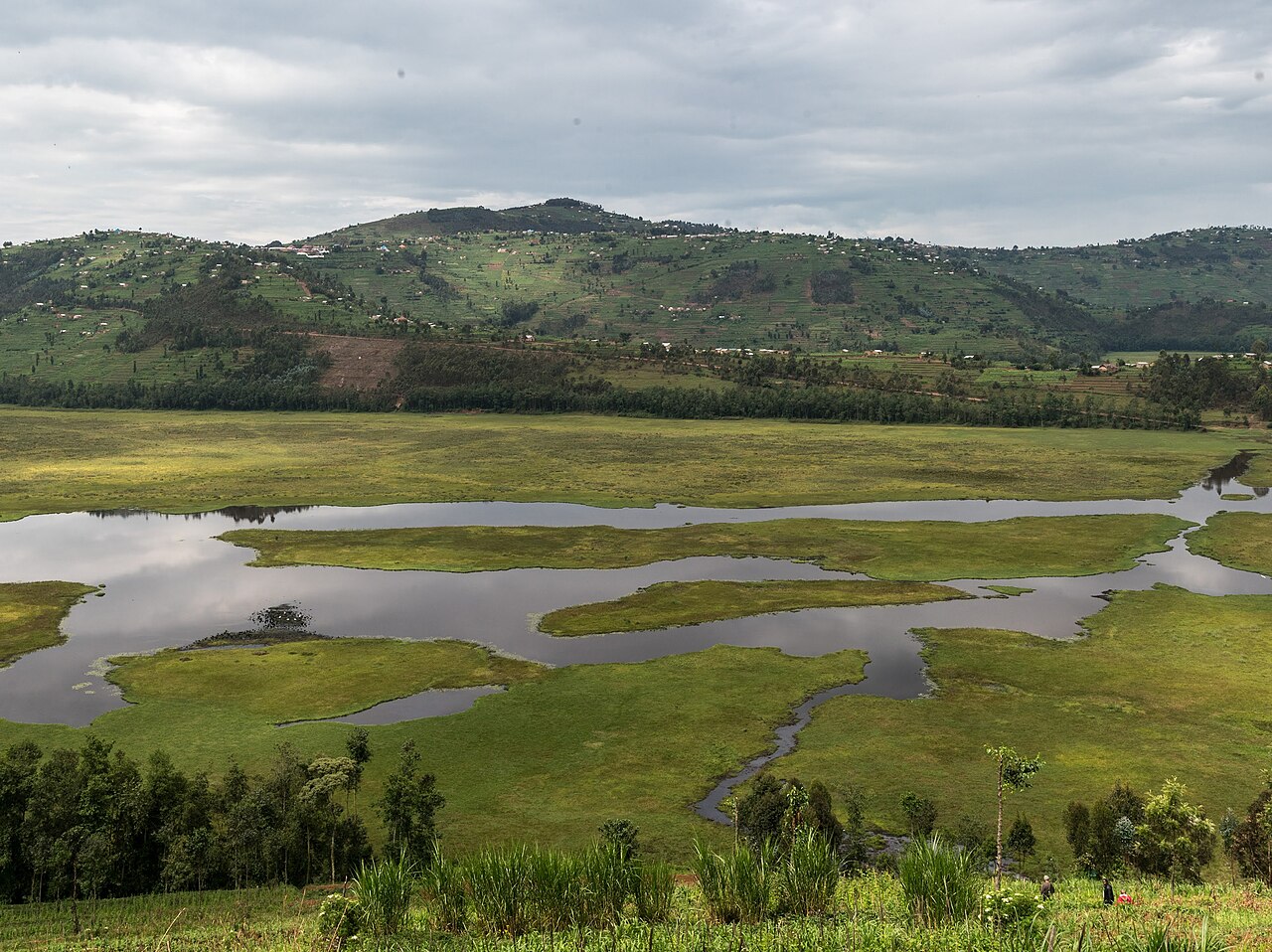
    Near Rwanda’s Rugezi Marsh, a new community centre is opening up possibilities for women who sew, weave and make handicrafts.

    The Rugezi Community Centre, in Miyove Sector of Gicumbi District, gives 45 women in sewing and craft cooperatives a permanent place to work and display their products. Supported by the Rwanda Wildlife Conservation Association, it connects local livelihoods with care for the surrounding wetland.

    A place to create and connect

    The centre also includes a coffee shop where passing travellers can stop, discover the women’s work and buy locally made goods.

    For the cooperatives, having a dedicated workspace and showroom creates opportunities to reach customers and develop their activities. The centre is new, so its longer-term impact is still to come.

    Growing alongside nature

    The idea behind the project is simple: protecting a wetland also means supporting the people who live beside it.

    By creating alternatives through sewing and handicrafts, the initiative aims to help families earn an income while reducing pressure on Rugezi’s natural resources.

    For MyHappyAfrica, this is an encouraging story of community skills finding room to grow. A place to work, a place to sell and a connection with visitors can become the beginning of a new chapter.

    What local skill deserves more support in your community? Tell us in the comments.

    Source: Gicumbi District, 28 September 2026.

    Photo: Rugezi Marsh, photographed in 2021. Bisoke / Wikimedia Commons, CC BY-SA 4.0. Cropped .

  • How an 11-year-old helped make her school greener in Mali

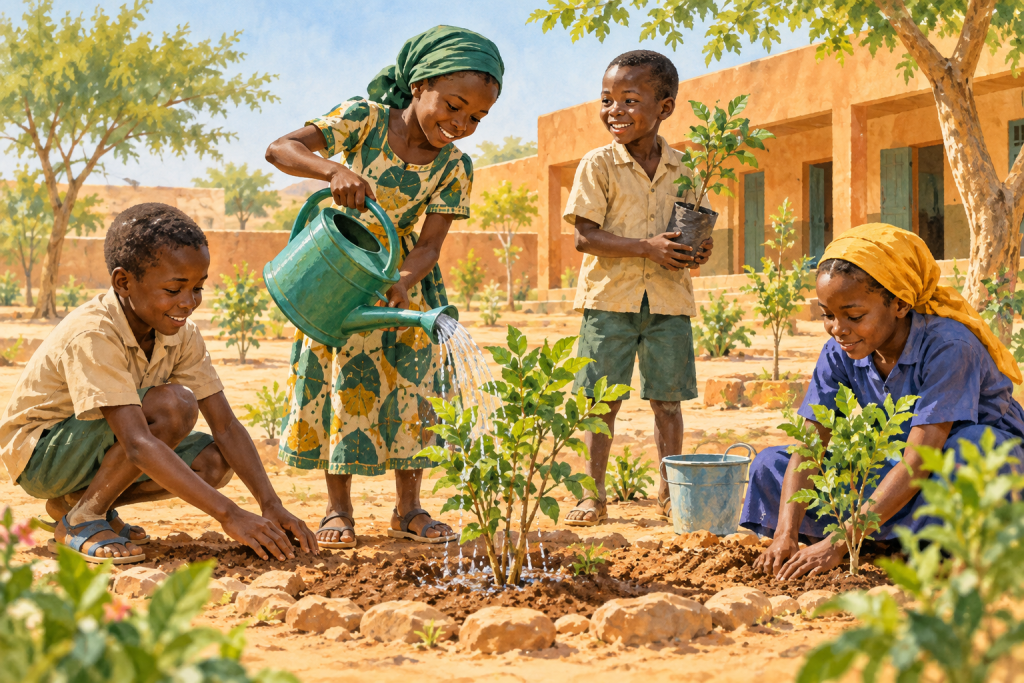
    AI-generated illustration of a school garden. This does not depict Halimatou or her classmates.

    At Kabara primary school, near Timbuktu, Halimatou, 11, helped bring a garden to life.

    As president of the school’s ECO club, she gathered 15 classmates. Supported by teachers and young volunteers, they cleared waste, prepared the ground and planted their first 20 shrubs.

    The pupils shared the watering and protected the young plants. Their garden became a space for shade, teamwork and learning.

    A small project with a meaningful result—and a reminder of what children can achieve together.

    MyHappyAfrica — Real people, Real progress, Real Africa.

    Source: UNICEF Mali, “My school, my responsibility: How 11-year-old Halimatou championed a green revolution”, 16 February 2026.

    Read the original UNICEF story

    Lire l’article original de l’UNICEF

  • Les femmes qui contribuent à bâtir une nouvelle Afrique

    Partout en Afrique, les femmes développent des exploitations agricoles, créent des entreprises, conçoivent de nouvelles technologies et ouvrent des portes grâce à l’éducation. Leur travail soutient les familles, crée des emplois et aide les communautés à se développer.

    Ces progrès ne font pas toujours la une de l’actualité internationale, mais ils se réalisent chaque jour.

    Transformer l’agriculture

    Les femmes ont toujours joué un rôle essentiel dans l’agriculture africaine. Elles cultivent des aliments, s’occupent du bétail, transforment les récoltes et vendent leurs produits sur les marchés locaux.

    Aujourd’hui, beaucoup vont encore plus loin. Elles créent des coopératives agricoles, utilisent des semences améliorées, adoptent des équipements modernes et transforment les récoltes en produits finis tels que la farine, l’huile de cuisson, les jus et les aliments emballés.

    L’Organisation des Nations Unies pour l’alimentation et l’agriculture indique que les femmes représentent une part importante de la main-d’œuvre dans les systèmes agroalimentaires africains. Leur contribution va bien au-delà des exploitations agricoles : elle favorise la sécurité alimentaire, les revenus des ménages et l’emploi en milieu rural.

    Lorsque les femmes bénéficient d’un meilleur accès à la terre, au financement, à la formation et à la technologie, des communautés entières en profitent.

    Créer des entreprises et des emplois

    L’Afrique affiche l’un des taux d’entrepreneuriat féminin les plus élevés au monde. Selon certaines estimations, environ une femme africaine sur quatre crée ou dirige une entreprise.

    Des étals de marché aux entreprises agroalimentaires, en passant par les marques de mode et les services numériques, les femmes transforment des idées locales en sources de revenus et d’emplois.

    Cependant, l’accès au financement reste un obstacle majeur. La Banque africaine de développement estime que les entreprises appartenant à des femmes en Afrique font face à un déficit de financement d’environ 42 milliards de dollars.

    Malgré cette difficulté, les femmes continuent de créer des entreprises. Elles commencent souvent avec des économies limitées et développent leurs activités grâce à leur détermination, à leur connaissance du marché local et à de solides réseaux communautaires.

    Stimuler l’innovation

    Les femmes africaines utilisent également la science et la technologie pour résoudre des problèmes concrets.

    Des innovatrices développent des services de paiement numérique, des plateformes de santé, des produits d’énergie propre et des technologies agricoles. Certaines créent des systèmes qui permettent aux hôpitaux d’obtenir des fournitures médicales essentielles, tandis que d’autres aident les agriculteurs à accéder à des informations sur les marchés, la météo et la gestion des cultures.

    Ces innovations sont importantes parce qu’elles répondent directement aux problèmes rencontrés dans les communautés africaines. Elles montrent que l’innovation ne concerne pas uniquement les machines de pointe : elle consiste aussi à trouver des solutions efficaces pour améliorer la vie quotidienne.

    Changer des vies grâce à l’éducation

    L’éducation permet à une nouvelle génération de femmes africaines d’accéder à des domaines qui leur étaient autrefois difficilement accessibles.

    De plus en plus de femmes deviennent enseignantes, scientifiques, ingénieures, médecins, chercheuses et entrepreneures dans le secteur technologique. Parallèlement, des organisations dirigées par des femmes apprennent aux filles à coder, les accompagnent dans leur scolarité et les initient aux sciences et à l’entrepreneuriat.

    L’éducation d’une fille peut produire des effets qui vont bien au-delà de sa propre vie. Elle peut renforcer sa capacité à gagner un revenu, améliorer les perspectives de sa famille et inspirer d’autres filles au sein de sa communauté.

    Des inégalités importantes subsistent, notamment dans les zones rurales ainsi que dans les domaines scientifiques et technologiques. Néanmoins, chaque fille qui entre dans une salle de classe — et chaque femme qui partage ses connaissances — contribue à faire avancer l’Afrique.

    Des progrès réels malgré les défis

    Cela ne signifie pas que tous les obstacles ont disparu. De nombreuses femmes africaines ont encore moins accès que les hommes à la terre, au financement des entreprises, à la technologie et aux études supérieures.

    Mais les progrès sont bien réels.

    Dans les exploitations agricoles, les salles de classe, les laboratoires et les entreprises, les femmes africaines n’attendent pas le changement : elles le créent. Leur travail nourrit les communautés, crée des emplois, apporte des solutions et inspire la prochaine génération.

    C’est ainsi que l’Afrique évolue : grâce à de vraies personnes qui accomplissent de vrais progrès.

    De vraies personnes. De vrais progrès. La vraie Afrique.

    Sources : Organisation des Nations Unies pour l’alimentation et l’agriculture, The Status of Women in Agrifood Systems ; Banque africaine de développement, Affirmative Finance Action for Women in Africa ; Banque mondiale, Women, Business and the Law.


  • The Women Helping to Build a New Africa

    Across Africa, women are building farms, creating businesses, developing new technologies and opening doors through education. Their work is supporting families, creating employment and helping communities grow.

    This progress does not always make international headlines, but it is happening every day.

    Transforming farming

    Women have always played an essential role in African agriculture. They grow food, look after livestock, process crops and sell produce in local markets.

    Today, many are going further. Women are forming farming cooperatives, using improved seeds, adopting modern equipment and turning crops into finished products such as flour, cooking oil, juice and packaged foods.

    The Food and Agriculture Organization reports that women represent a major part of the workforce within Africa’s agrifood systems. Their contribution reaches far beyond the farm: it supports food security, household income and rural employment.

    When women gain better access to land, finance, training and technology, entire communities benefit.

    Building businesses and creating jobs

    Africa has one of the world’s highest levels of female entrepreneurship. Research has estimated that approximately one in four African women starts or manages a business.

    From market stalls and food-processing companies to fashion brands and digital services, women are turning local ideas into sources of income and employment.

    However, access to finance remains a major obstacle. The African Development Bank estimates that women-owned businesses across Africa face a financing gap of approximately $42 billion.

    Despite this challenge, women continue to build businesses—often starting with limited savings and growing through determination, local knowledge and strong community networks.

    Driving innovation

    African women are also using science and technology to solve practical problems.

    Female innovators are developing digital payment services, health platforms, clean-energy products and agricultural technologies. Some are creating systems that connect hospitals with essential medical supplies, while others are helping farmers obtain information about markets, weather and crop management.

    These innovations matter because they are designed around problems experienced within African communities. They demonstrate that innovation is not only about advanced machines—it is also about finding effective solutions that improve everyday life.

    Changing lives through education

    Education is helping a new generation of African women enter areas once considered difficult for them to access.

    More women are becoming teachers, scientists, engineers, doctors, researchers and technology entrepreneurs. At the same time, women-led organisations are teaching girls how to code, supporting them through school and introducing them to science and business.

    Educating a girl can create benefits that extend far beyond one individual. It can strengthen her earning potential, improve opportunities for her family and inspire other girls within her community.

    Important gaps still remain, particularly in rural areas and in science and technology. Nevertheless, every girl who enters a classroom—and every woman who shares her knowledge—helps move Africa forward.

    Progress with challenges still ahead

    The story is not that every barrier has disappeared. Many African women still have less access to land, business finance, technology and advanced education than men.

    But the progress is real.

    Across farms, classrooms, laboratories and businesses, African women are not waiting for change—they are creating it. Their work is feeding communities, creating jobs, solving problems and inspiring the next generation.

    This is how Africa is changing: through real people making real progress.

    Real People. Real Progress. Real Africa.

    Sources: Food and Agriculture Organization of the United Nations, The Status of Women in Agrifood Systems; African Development Bank, Affirmative Finance Action for Women in Africa; World Bank, Women, Business and the Law.

  • Nigeria: Solar-Powered Food Factory Supports Women and Farmers

    Nigeria: Solar-Powered Food Factory Supports Women and Farmers

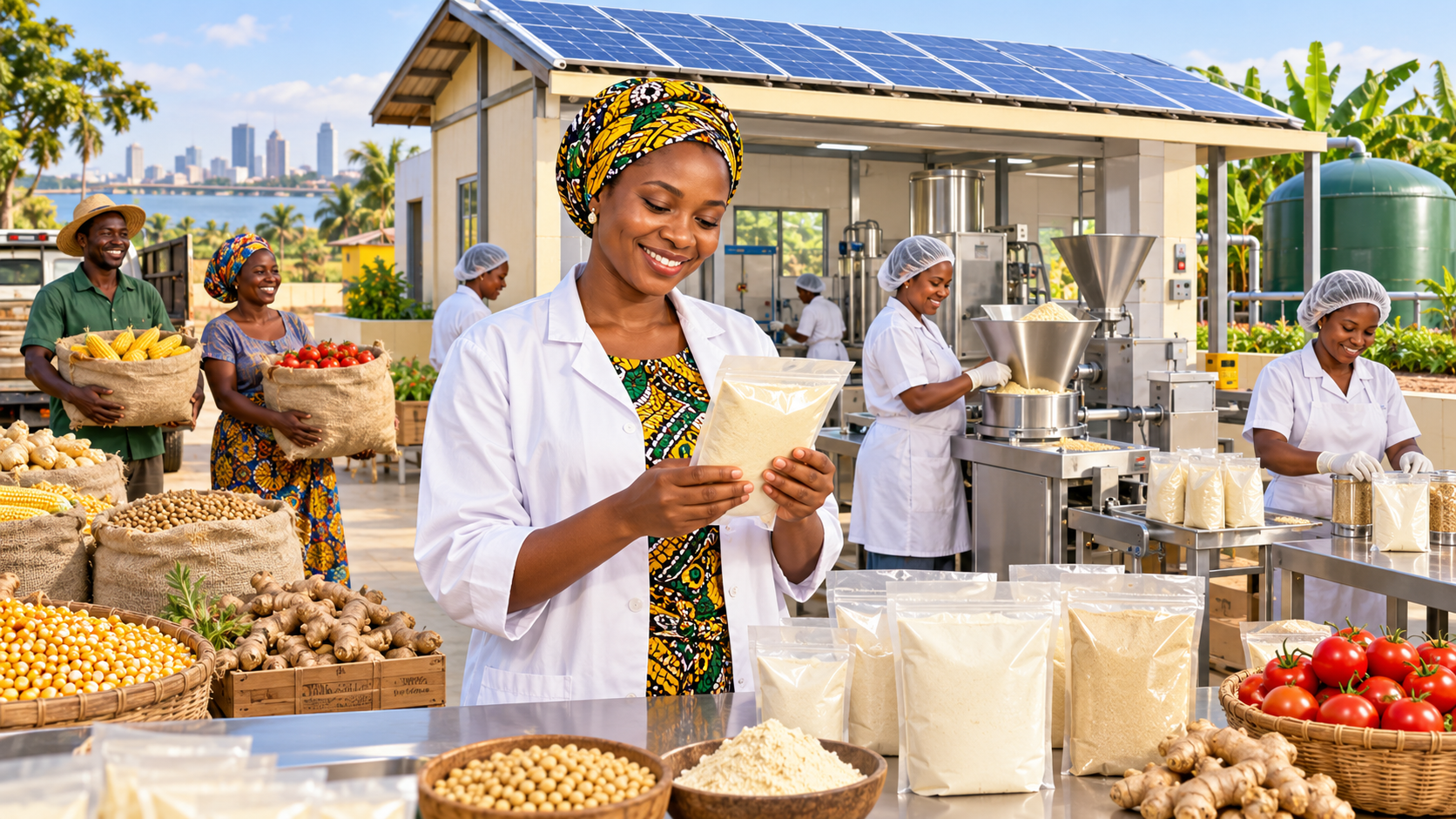
    In Lagos, Nigeria, entrepreneur Blessing Unoka is showing how clean energy can strengthen food production, create jobs and support local farmers.

    Her company, Sambal Enterprise, operates a solar-powered food-processing centre that does not rely on diesel generators or grid electricity. It processes soybeans, maize, ginger and tomatoes into products including soya milk powder, plantain flour and maize flour.

    The business currently employs 50 women and purchases crops from more than 200 smallholder farmers. This provides farmers with a reliable market while creating employment opportunities for women working in food processing and distribution.

    Sambal Enterprise also uses a biodigester to transform organic waste from its operations into cooking energy and fertiliser. This circular system reduces waste and helps the business avoid approximately 15 tonnes of carbon emissions each year.

    In August 2026, the company won first place at the AfroHackathon clean-energy innovation challenge in Accra, Ghana. The award recognised its practical combination of renewable energy, food production and community impact.

    Blessing Unoka’s achievement demonstrates how African entrepreneurs can build profitable businesses while supporting farmers, creating jobs and protecting the environment.

    Source: Energy News Network https://energy-news-network.com/industry-news/afrohackathon-winner-blessing-unoka-sambal/

  • Africa Comes Together to Build a Stronger Health Workforce

    Africa Comes Together to Build a Stronger Health Workforce

    Across Africa, countries are coming together around an ambitious shared goal: to train, employ and retain three million additional health workers by 2035.

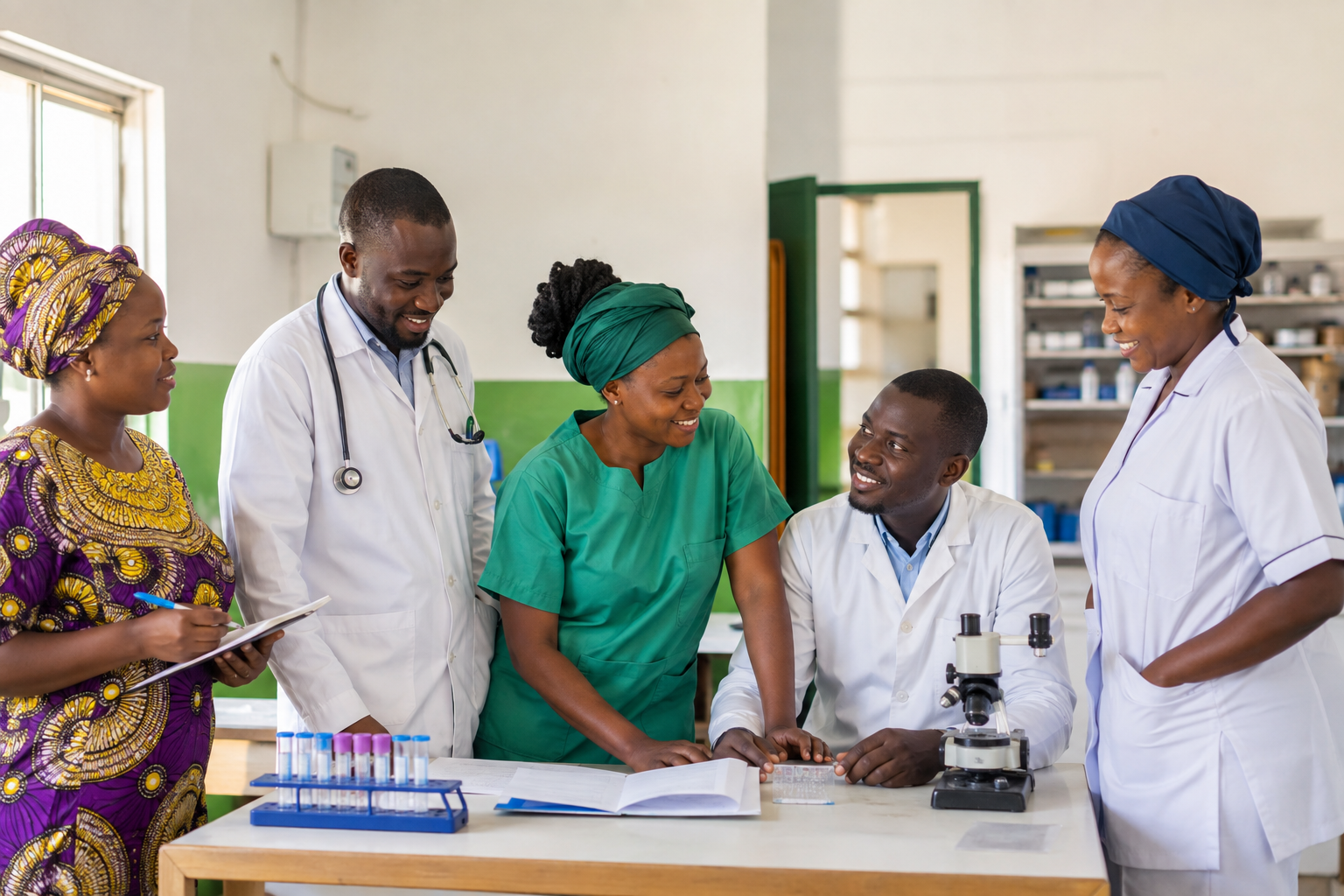
    The commitment forms part of the Africa Health Workforce Agenda 2026–2035. It recognises that strong healthcare systems depend on the people serving patients every day—including doctors, nurses, midwives, pharmacists, laboratory professionals and community health workers.

    For many African communities, increasing the number of qualified health workers could mean shorter journeys to receive care, better support for mothers and babies, faster responses to disease outbreaks and more dependable local clinics.

    The initiative is also about opportunity. Training and employing more health professionals can create skilled jobs for young Africans while helping countries retain valuable talent. When healthcare workers can build rewarding careers at home, their knowledge continues benefiting the communities that helped raise and educate them.

    No country can solve every healthcare challenge alone. By sharing knowledge, coordinating training and working towards a common target, African countries can build stronger and more resilient health systems together.

    This is the kind of progress MyHappyAfrica celebrates. It demonstrates that when people and countries unite behind a practical goal, ambitious change becomes possible.

    Three million more health workers is a bold target—but cooperation can turn bold ideas into real improvements in people’s lives.

    Source: World Health Organization Regional Office for Africa
    https://who-africa.africa-newsroom.com/press/african-countries-commit-to-train-and-retain-3-million-more-health-workers-by-2035?lang=en