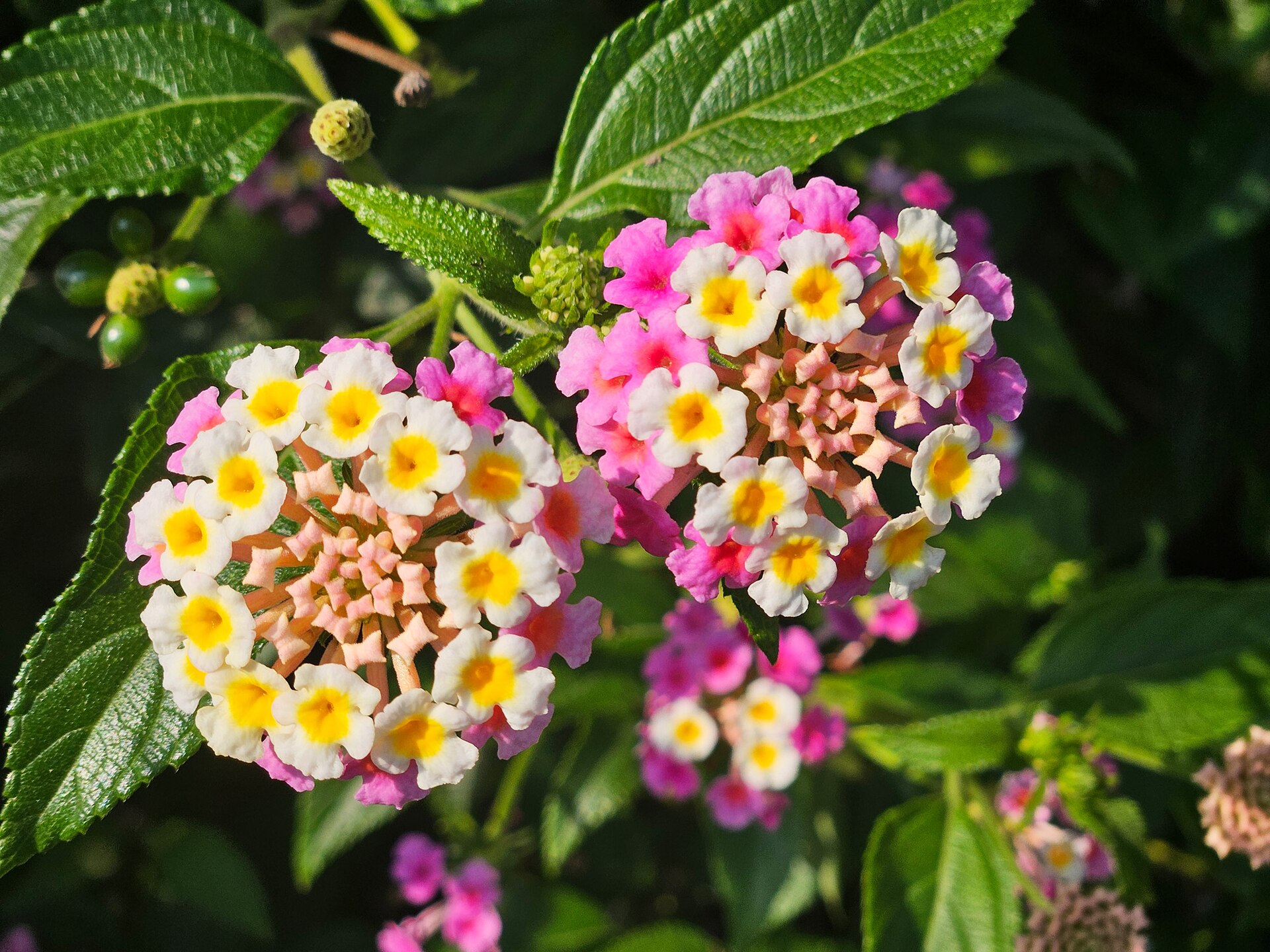
Photo: WoreczkoJan / Wikimedia Commons — CC BY 4.0.
For Rudra Patel, a question about an invasive plant became an award-winning school research project: could artificial intelligence help scientists explore its possible use in agriculture?
The Grade 11 learner at the UJ Academy Maths, Science and ICT School of Specialisation in Gauteng combined machine learning with laboratory experiments to investigate how different concentrations of Lantana camara extract affected wheat growth.
His work earned him a Gold Medal, the Top Senior Scientist Award in Plant Sciences and the overall 2026 Top Senior Scientist Award, accompanied by a R75,000 prize. The Eskom Expo International Science Fair took place from 29 September to 2 October 2026 in Johannesburg.
Turning an environmental problem into a research question
Lantana camara is an invasive plant. Patel’s project explored whether extracts from it could have potential as natural substances that support crop growth.
Machine learning offered a way to examine patterns in the data. Laboratory experiments brought the question back to living plants and their actual responses.
Together, these approaches allowed Patel to investigate how computer modelling might complement experimental science in the search for useful applications for invasive plant material.
His models identified general trends linked to the concentration of the extract. But recognising a pattern is only one step towards establishing whether something could work reliably in agriculture.
An achievement—and an early research step
The University of Johannesburg’s account makes the limits clear: further standardised experiments and analysis would be needed before reliable agricultural applications could be established.
Patel’s project should therefore be understood as an investigation, rather than a finished crop booster ready for farmers. It does not establish that Lantana camara extract will improve crops under farm conditions.
That does not diminish the achievement. After months of research, experimentation and refinement, a school learner brought together computing and plant science to explore a practical environmental question—and presented his work to judges at an international science fair.
His story offers encouragement to other young people with questions of their own. Innovation does not always begin with a finished invention. Sometimes it begins with curiosity, careful experiments and the patience to discover what still needs to be understood.
Written by MyHappyAfrica
Source: University of Johannesburg.