In Côte d’Ivoire, discarded plastic is being given an unexpected new purpose: building classrooms.
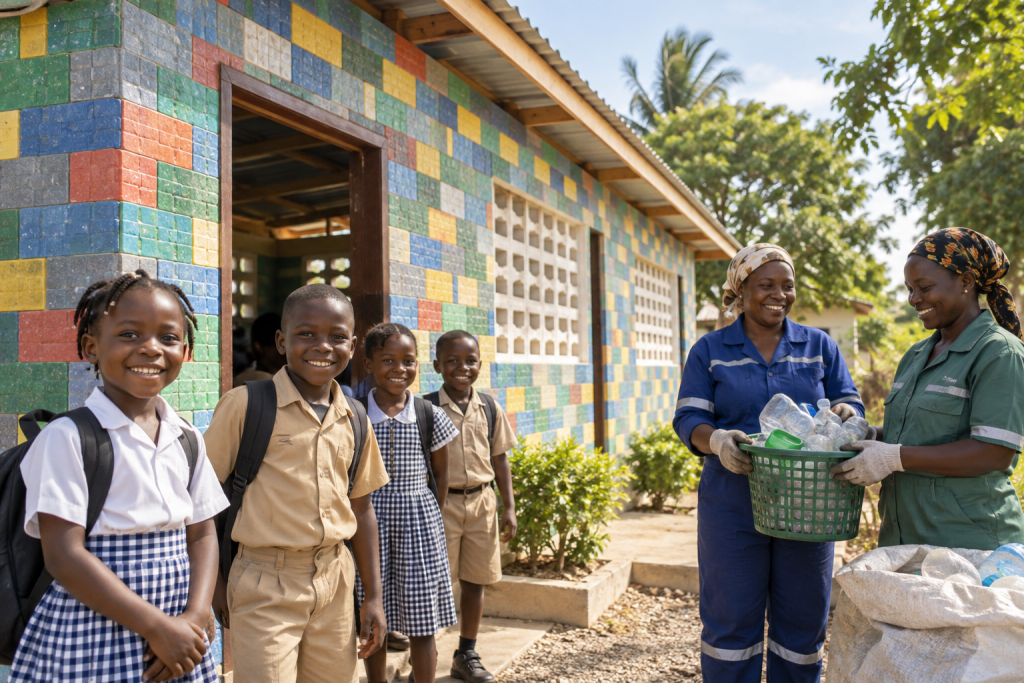
The project transforms difficult-to-recycle plastic into strong, interlocking bricks. These bricks can then be assembled into classrooms more quickly than many conventional building materials.
It is a practical response to two challenges at once—the accumulation of plastic waste and the need for safe learning spaces.
From discarded plastic to school walls
Following an initial pilot, UNICEF and the Colombian social enterprise Conceptos Plásticos announced the construction of a recycling factory in Abidjan in 2019.
At the time, UNICEF said the factory would be able to process 9,600 tonnes of plastic annually. The initial ambition was to build 528 classrooms for more than 25,000 children.
A report published on 5 September 2026 states that 1,441 tonnes of plastic have since been transformed and 262 classrooms constructed, creating learning spaces for approximately 13,100 children.
The bricks are lightweight, modular and designed to fit together. This can make classroom construction faster while also giving waste that might otherwise be burned or dumped a useful destination.
Women at the centre of the solution
The programme also creates opportunities for women who collect and sort recyclable material.
By developing a dependable market for discarded plastic, the project can help waste collectors earn an income while contributing to cleaner communities.
Their work is an essential part of the process. Without the people who recover and sort the material, the plastic cannot begin its journey from waste to classroom wall.
A solution with several benefits
This initiative does not pretend to solve all of Côte d’Ivoire’s education or waste-management challenges. It does, however, show what can happen when environmental action, local employment and education are considered together.
A discarded plastic container may appear worthless. Through collection, innovation and construction, it can become part of a place where children learn.
That is real progress: turning a problem found in the streets into an opportunity inside the classroom.
Des personnes authentiques. De vrais progrès. La vraie Afrique.
Sources: UNICEF and The Times of India, September 2026.
Laisser un commentaire