Author: myhappyafrica

  • Côte d’Ivoire Is Turning Plastic Waste Into Classrooms

    In Côte d’Ivoire, discarded plastic is being given an unexpected new purpose: building classrooms.
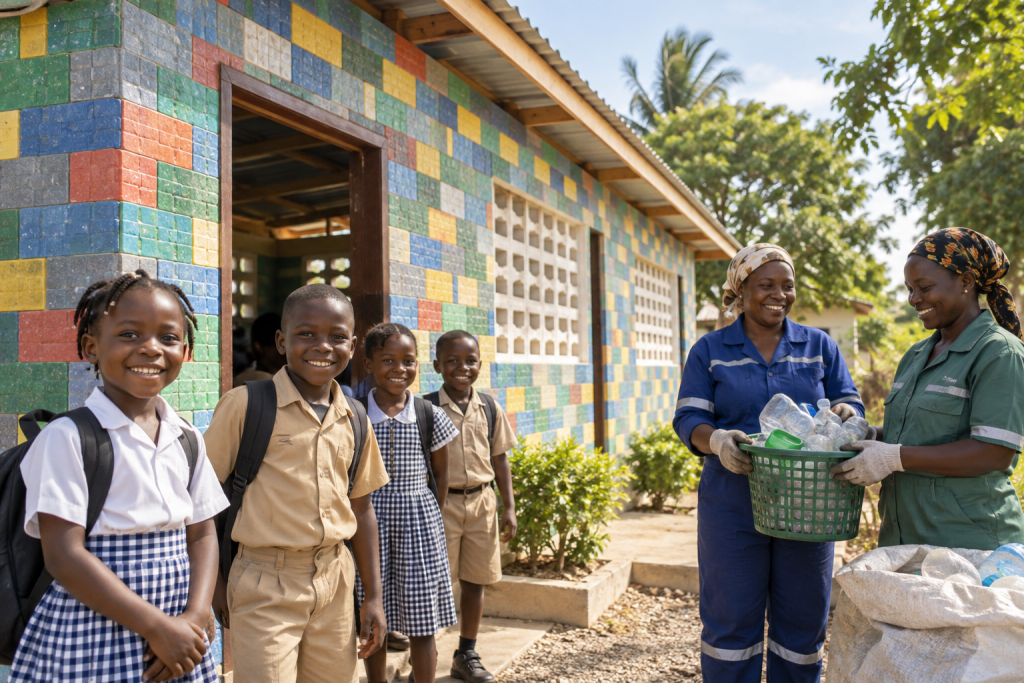
    The project transforms difficult-to-recycle plastic into strong, interlocking bricks. These bricks can then be assembled into classrooms more quickly than many conventional building materials.
    It is a practical response to two challenges at once—the accumulation of plastic waste and the need for safe learning spaces.

    From discarded plastic to school walls

    Following an initial pilot, UNICEF and the Colombian social enterprise Conceptos Plásticos announced the construction of a recycling factory in Abidjan in 2019.

    At the time, UNICEF said the factory would be able to process 9,600 tonnes of plastic annually. The initial ambition was to build 528 classrooms for more than 25,000 children.

    A report published on 5 September 2026 states that 1,441 tonnes of plastic have since been transformed and 262 classrooms constructed, creating learning spaces for approximately 13,100 children.

    The bricks are lightweight, modular and designed to fit together. This can make classroom construction faster while also giving waste that might otherwise be burned or dumped a useful destination.

    Women at the centre of the solution

    The programme also creates opportunities for women who collect and sort recyclable material.
    By developing a dependable market for discarded plastic, the project can help waste collectors earn an income while contributing to cleaner communities.

    Their work is an essential part of the process. Without the people who recover and sort the material, the plastic cannot begin its journey from waste to classroom wall.

    A solution with several benefits
    This initiative does not pretend to solve all of Côte d’Ivoire’s education or waste-management challenges. It does, however, show what can happen when environmental action, local employment and education are considered together.

    A discarded plastic container may appear worthless. Through collection, innovation and construction, it can become part of a place where children learn.
    That is real progress: turning a problem found in the streets into an opportunity inside the classroom.

    Real People. Real Progress. Real Africa.

    Sources: UNICEF and The Times of India, September 2026.

  • Les femmes qui contribuent à bâtir une nouvelle Afrique

    Partout en Afrique, les femmes développent des exploitations agricoles, créent des entreprises, conçoivent de nouvelles technologies et ouvrent des portes grâce à l’éducation. Leur travail soutient les familles, crée des emplois et aide les communautés à se développer.

    Ces progrès ne font pas toujours la une de l’actualité internationale, mais ils se réalisent chaque jour.

    Transformer l’agriculture

    Les femmes ont toujours joué un rôle essentiel dans l’agriculture africaine. Elles cultivent des aliments, s’occupent du bétail, transforment les récoltes et vendent leurs produits sur les marchés locaux.

    Aujourd’hui, beaucoup vont encore plus loin. Elles créent des coopératives agricoles, utilisent des semences améliorées, adoptent des équipements modernes et transforment les récoltes en produits finis tels que la farine, l’huile de cuisson, les jus et les aliments emballés.

    L’Organisation des Nations Unies pour l’alimentation et l’agriculture indique que les femmes représentent une part importante de la main-d’œuvre dans les systèmes agroalimentaires africains. Leur contribution va bien au-delà des exploitations agricoles : elle favorise la sécurité alimentaire, les revenus des ménages et l’emploi en milieu rural.

    Lorsque les femmes bénéficient d’un meilleur accès à la terre, au financement, à la formation et à la technologie, des communautés entières en profitent.

    Créer des entreprises et des emplois

    L’Afrique affiche l’un des taux d’entrepreneuriat féminin les plus élevés au monde. Selon certaines estimations, environ une femme africaine sur quatre crée ou dirige une entreprise.

    Des étals de marché aux entreprises agroalimentaires, en passant par les marques de mode et les services numériques, les femmes transforment des idées locales en sources de revenus et d’emplois.

    Cependant, l’accès au financement reste un obstacle majeur. La Banque africaine de développement estime que les entreprises appartenant à des femmes en Afrique font face à un déficit de financement d’environ 42 milliards de dollars.

    Malgré cette difficulté, les femmes continuent de créer des entreprises. Elles commencent souvent avec des économies limitées et développent leurs activités grâce à leur détermination, à leur connaissance du marché local et à de solides réseaux communautaires.

    Stimuler l’innovation

    Les femmes africaines utilisent également la science et la technologie pour résoudre des problèmes concrets.

    Des innovatrices développent des services de paiement numérique, des plateformes de santé, des produits d’énergie propre et des technologies agricoles. Certaines créent des systèmes qui permettent aux hôpitaux d’obtenir des fournitures médicales essentielles, tandis que d’autres aident les agriculteurs à accéder à des informations sur les marchés, la météo et la gestion des cultures.

    Ces innovations sont importantes parce qu’elles répondent directement aux problèmes rencontrés dans les communautés africaines. Elles montrent que l’innovation ne concerne pas uniquement les machines de pointe : elle consiste aussi à trouver des solutions efficaces pour améliorer la vie quotidienne.

    Changer des vies grâce à l’éducation

    L’éducation permet à une nouvelle génération de femmes africaines d’accéder à des domaines qui leur étaient autrefois difficilement accessibles.

    De plus en plus de femmes deviennent enseignantes, scientifiques, ingénieures, médecins, chercheuses et entrepreneures dans le secteur technologique. Parallèlement, des organisations dirigées par des femmes apprennent aux filles à coder, les accompagnent dans leur scolarité et les initient aux sciences et à l’entrepreneuriat.

    L’éducation d’une fille peut produire des effets qui vont bien au-delà de sa propre vie. Elle peut renforcer sa capacité à gagner un revenu, améliorer les perspectives de sa famille et inspirer d’autres filles au sein de sa communauté.

    Des inégalités importantes subsistent, notamment dans les zones rurales ainsi que dans les domaines scientifiques et technologiques. Néanmoins, chaque fille qui entre dans une salle de classe — et chaque femme qui partage ses connaissances — contribue à faire avancer l’Afrique.

    Des progrès réels malgré les défis

    Cela ne signifie pas que tous les obstacles ont disparu. De nombreuses femmes africaines ont encore moins accès que les hommes à la terre, au financement des entreprises, à la technologie et aux études supérieures.

    Mais les progrès sont bien réels.

    Dans les exploitations agricoles, les salles de classe, les laboratoires et les entreprises, les femmes africaines n’attendent pas le changement : elles le créent. Leur travail nourrit les communautés, crée des emplois, apporte des solutions et inspire la prochaine génération.

    C’est ainsi que l’Afrique évolue : grâce à de vraies personnes qui accomplissent de vrais progrès.

    De vraies personnes. De vrais progrès. La vraie Afrique.

    Sources : Organisation des Nations Unies pour l’alimentation et l’agriculture, The Status of Women in Agrifood Systems ; Banque africaine de développement, Affirmative Finance Action for Women in Africa ; Banque mondiale, Women, Business and the Law.

  • The Women Helping to Build a New Africa

    Across Africa, women are building farms, creating businesses, developing new technologies and opening doors through education. Their work is supporting families, creating employment and helping communities grow.

    This progress does not always make international headlines, but it is happening every day.

    Transforming farming

    Women have always played an essential role in African agriculture. They grow food, look after livestock, process crops and sell produce in local markets.

    Today, many are going further. Women are forming farming cooperatives, using improved seeds, adopting modern equipment and turning crops into finished products such as flour, cooking oil, juice and packaged foods.

    The Food and Agriculture Organization reports that women represent a major part of the workforce within Africa’s agrifood systems. Their contribution reaches far beyond the farm: it supports food security, household income and rural employment.

    When women gain better access to land, finance, training and technology, entire communities benefit.

    Building businesses and creating jobs

    Africa has one of the world’s highest levels of female entrepreneurship. Research has estimated that approximately one in four African women starts or manages a business.

    From market stalls and food-processing companies to fashion brands and digital services, women are turning local ideas into sources of income and employment.

    However, access to finance remains a major obstacle. The African Development Bank estimates that women-owned businesses across Africa face a financing gap of approximately $42 billion.

    Despite this challenge, women continue to build businesses—often starting with limited savings and growing through determination, local knowledge and strong community networks.

    Driving innovation

    African women are also using science and technology to solve practical problems.

    Female innovators are developing digital payment services, health platforms, clean-energy products and agricultural technologies. Some are creating systems that connect hospitals with essential medical supplies, while others are helping farmers obtain information about markets, weather and crop management.

    These innovations matter because they are designed around problems experienced within African communities. They demonstrate that innovation is not only about advanced machines—it is also about finding effective solutions that improve everyday life.

    Changing lives through education

    Education is helping a new generation of African women enter areas once considered difficult for them to access.

    More women are becoming teachers, scientists, engineers, doctors, researchers and technology entrepreneurs. At the same time, women-led organisations are teaching girls how to code, supporting them through school and introducing them to science and business.

    Educating a girl can create benefits that extend far beyond one individual. It can strengthen her earning potential, improve opportunities for her family and inspire other girls within her community.

    Important gaps still remain, particularly in rural areas and in science and technology. Nevertheless, every girl who enters a classroom—and every woman who shares her knowledge—helps move Africa forward.

    Progress with challenges still ahead

    The story is not that every barrier has disappeared. Many African women still have less access to land, business finance, technology and advanced education than men.

    But the progress is real.

    Across farms, classrooms, laboratories and businesses, African women are not waiting for change—they are creating it. Their work is feeding communities, creating jobs, solving problems and inspiring the next generation.

    This is how Africa is changing: through real people making real progress.

    Real People. Real Progress. Real Africa.

    Sources: Food and Agriculture Organization of the United Nations, The Status of Women in Agrifood Systems; African Development Bank, Affirmative Finance Action for Women in Africa; World Bank, Women, Business and the Law.

  • The Togolese Inventor Making Fufu Easier to Prepare

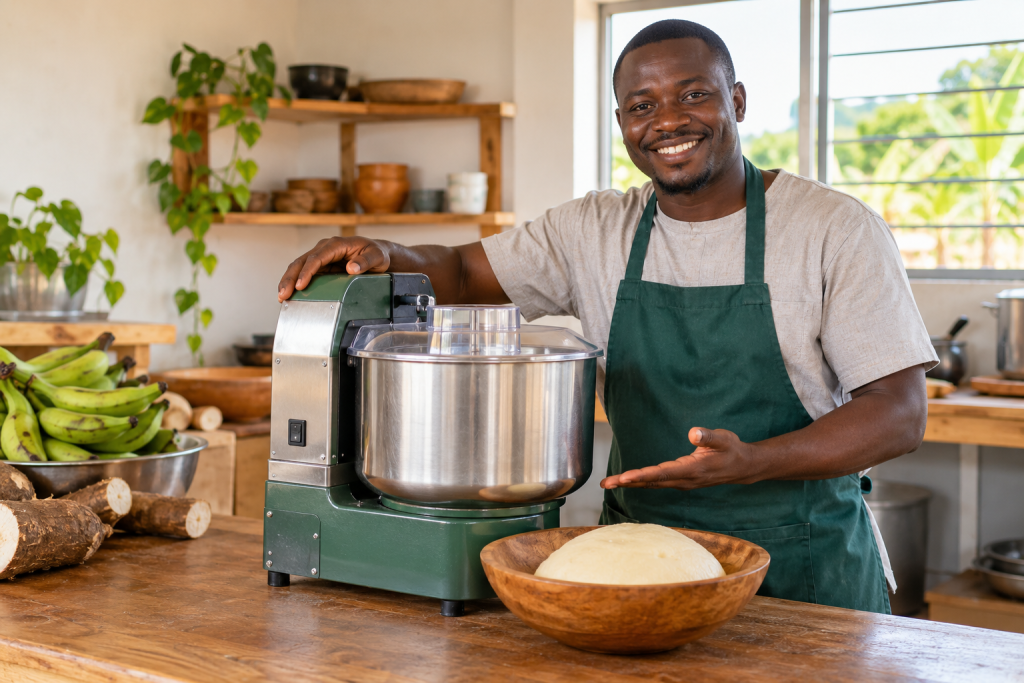
    In Togo, inventor and entrepreneur Jules Minsob Logou has turned an everyday challenge into an innovative African success story.

    He created the Foufoumix, a machine that prepares smooth fufu in just a few minutes. The invention reduces the time and physical effort normally required to pound cooked yam or cassava by hand.

    Trained in electrotechnics, Jules develops practical technology suited to African needs. Beyond the Foufoumix, his company has worked on other locally designed equipment, including a small agricultural tractor.

    His innovation has received recognition beyond Togo. In 2014, he won second place at the Innovation Prize for Africa, and the Foufoumix has reached customers in West Africa and abroad.

    Jules Minsob Logou’s journey shows that innovation does not always mean replacing tradition. Sometimes, it means using technology to preserve tradition while making everyday life easier.

    This is African creativity solving an African challenge.

    Real People. Real Progress. Real Africa.

    Sources: Forbes Afrique, Togo First and the official Foufoumix website.

    Image: AI-generated illustration by MyHappyAfrica.

  • How Benin’s ECOZEM Is Using Solar Energy to Improve Local Transport

    How Benin’s ECOZEM Is Using Solar Energy to Improve Local Transport

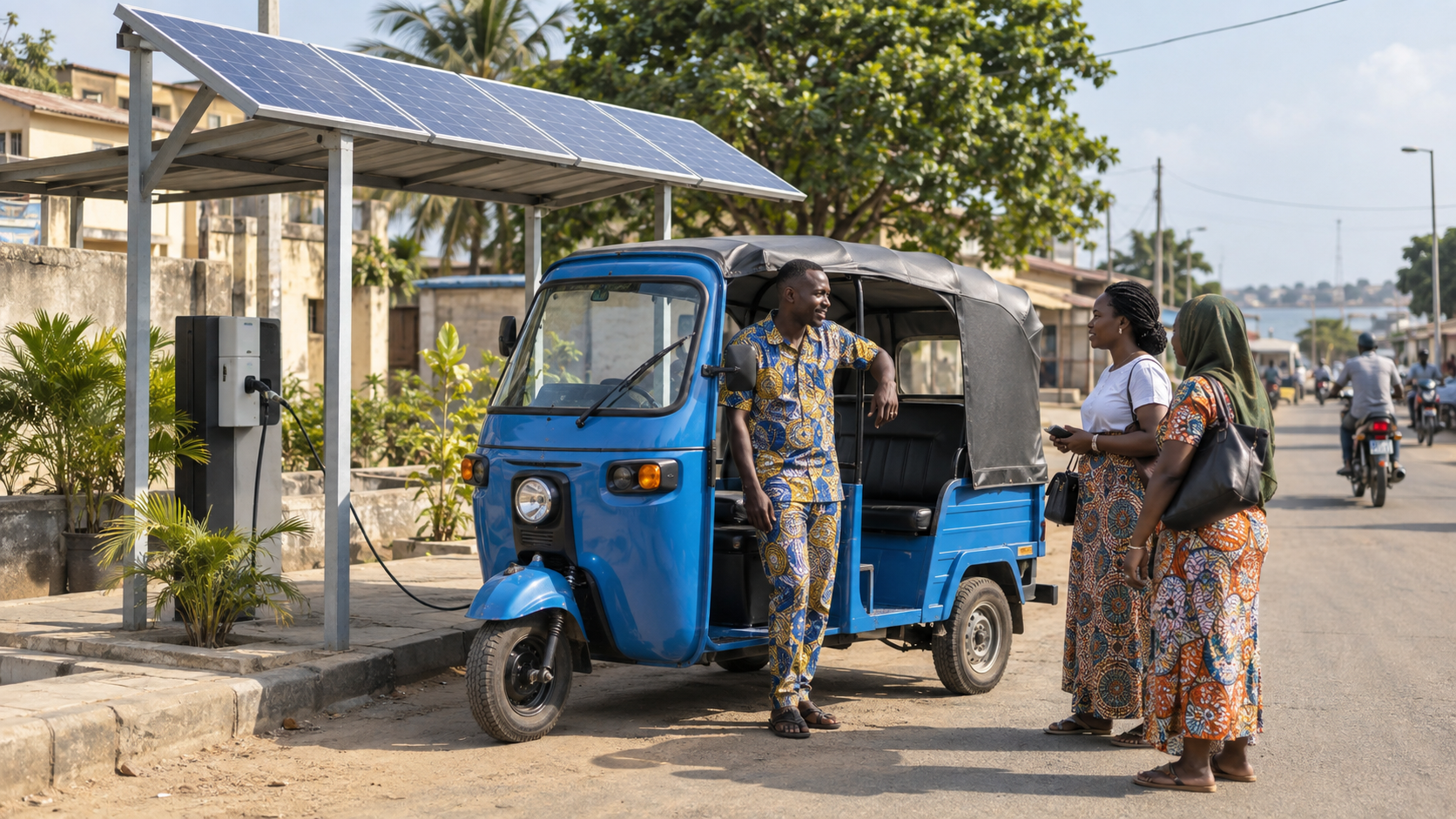
    In Benin, entrepreneur Fèmi Tankpinou is exploring a cleaner way to move people around towns and communities.

    Through his company, ECOZEM, he is developing battery-powered tuk-tuks and tricycles that can be recharged using solar energy.

    Transport Powered by Benin’s Sunshine

    Many people in Benin depend on small vehicles and motorcycles for their daily journeys.

    However, conventional vehicles require fuel, which can be expensive and produces air pollution.

    ECOZEM’s approach combines electric three-wheelers with solar charging. Instead of depending entirely on petrol or diesel, the vehicles use batteries that can be recharged with energy from the sun.

    This could make local transportation cleaner while reducing dependence on imported fuel.

    Designed for Everyday Journeys

    Electric tuk-tuks are smaller and simpler than conventional cars. They can carry passengers through busy neighbourhoods and travel on roads serving rural and peri-urban communities.

    Tankpinou told Global Citizen that the service has helped some students reach school more reliably, particularly in places where dependable transportation can be difficult to find.

    The vehicles are also intended to be affordable to operate and easier to maintain. ECOZEM has reportedly used recycled metal in some of its locally made vehicles, adding another environmental benefit to the project.

    A Practical Beninese Innovation

    ECOZEM is not claiming to replace every vehicle on Benin’s roads. Its work demonstrates how electric mobility and solar power could provide practical transport for particular communities.

    The initiative also shows that African entrepreneurs can adapt clean technology to local conditions instead of waiting for solutions designed elsewhere.

    Tankpinou hopes the idea can grow within Benin and eventually reach other African countries.

    From sunshine to everyday journeys, ECOZEM is showing how a locally developed transport solution could contribute to cleaner and more accessible mobility.

    Could solar-powered transport become part of everyday life in more African cities and communities?

    Source: Global Citizen

  • From Benin’s Cotton Fields to “Made in Benin” Fashion

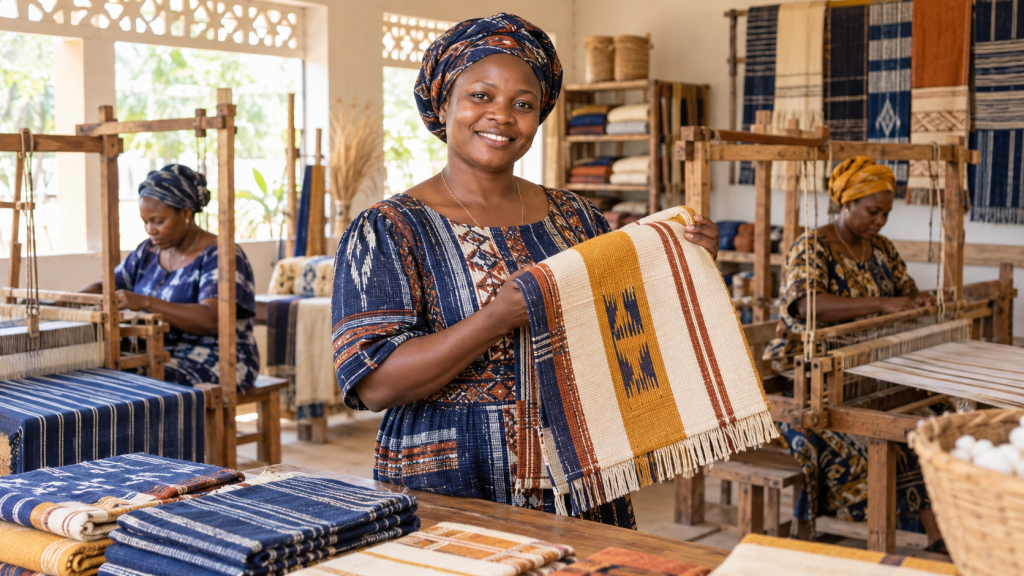
    In Parakou, northern Benin, entrepreneur Fatoumata Dosso is showing how local cotton can create fashion, employment and opportunity.

    Through her business, DAF Collection, she transforms cotton into traditional clothing inspired by the culture of northern Benin. Her creations proudly carry the label “Made in Benin.”

    Supporting Women Through Traditional Skills

    Fatoumata works with around twelve women who weave fabric for her collections. By connecting their traditional skills with paying customers, she is helping them turn weaving into a dependable source of income.

    One of the weavers, Chabi Baké, is a mother of five. Her work is providing enough income for her to begin building a home for her family.

    Creating More Value at Home

    Benin is Africa’s largest cotton producer, but much of its cotton has traditionally been exported before being transformed into finished products.

    That is beginning to change. Beninese entrepreneurs and manufacturers are now turning more locally grown cotton into fabric and clothing. The Glo-Djigbé Industrial Zone alone processes around 40,000 tonnes of cotton and produces between seven and ten million garments annually.

    This creates opportunities for farmers, textile workers, designers and small businesses across the country.

    A Proud Beninese Success Story

    Fatoumata’s ambition goes beyond fashion. She is preserving traditional weaving, supporting women and demonstrating the value of transforming African resources within Africa.

    Her journey is a powerful reminder that progress can begin with local materials, traditional knowledge and one entrepreneur determined to create something special.

    This is how Benin is changing—one thread, one skill and one opportunity at a time.

    What other African-made products deserve greater international recognition?

    Source: Associated Press

  • Cerebro: The African Innovation Turning Brain Signals into Movement

    Technology can become most powerful when it gives people greater independence.

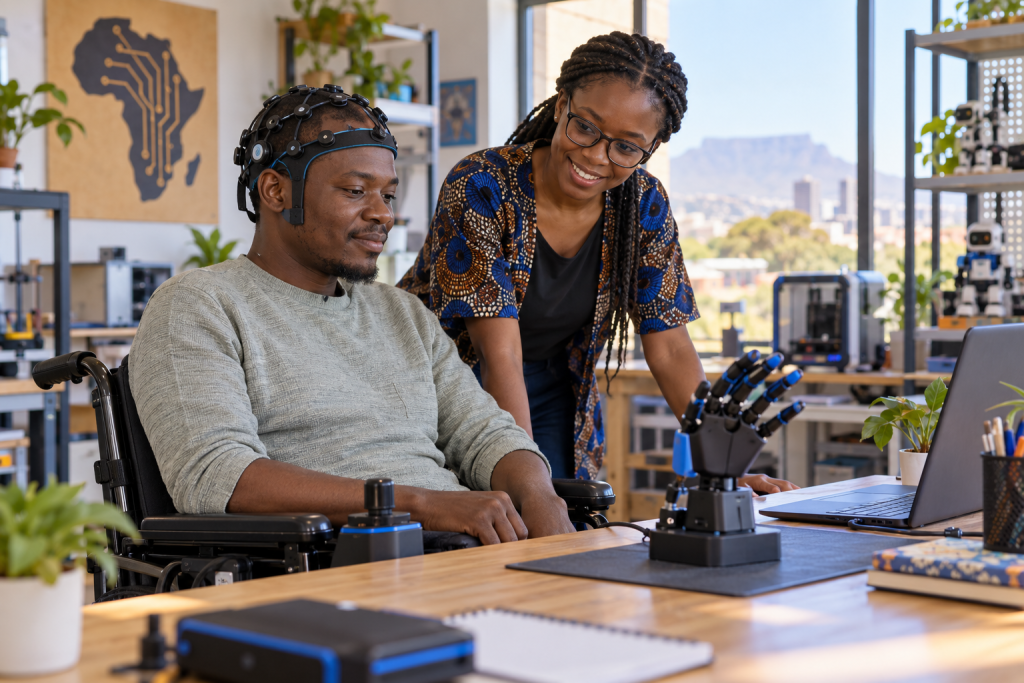
    African innovator Pierre Sedi is developing Cerebro, an affordable brain-computer interface designed for people with severe motor impairments. The system aims to translate brain signals into commands that can control assistive robotic devices.

    Brain-computer interfaces already exist, but their cost and complexity can make them difficult to access in underserved communities. Cerebro is being developed as a lower-cost and scalable alternative designed with African communities and other low-resource settings in mind.

    Pierre presented the project during the 2026 AI for Good Global Summit. The event brought together innovators using artificial intelligence and related technologies to solve practical human challenges.

    Cerebro is still a developing technology, rather than a finished medical product already in widespread use. However, its purpose is important: making advanced assistive technology more affordable and accessible to people who might otherwise be excluded.

    This is what African innovation can look like—using advanced knowledge not simply to impress, but to help people communicate, interact with devices and gain more control over their daily lives.

    What other African technologies deserve greater recognition?

    Source: ITU AI for Good https://aiforgood.itu.int/from-diagnosis-to-assistive-robotics-african-innovators-put-ai-to-work/

  • Nigerian Creator Uses Humour to Challenge Stereotypes About Africa

    Nigerian Creator Uses Humour to Challenge Stereotypes About Africa

    Nigerian content creator Charity Ekezie is using humour and creativity to challenge outdated stereotypes about Africa—and millions of people around the world are watching.

    Trained as a journalist, Charity began creating comedy sketches and videos online. Her audience grew rapidly after she joined TikTok in 2020, and she now has about 3.7 million followers on the platform.

    Her videos answer stereotypical questions with clever visual humour. If someone asks whether Africans have phones, for example, she may jokingly say no while a phone is clearly visible in the background. The humour exposes how inaccurate—and sometimes absurd—these assumptions can be.

    Charity combines entertainment with careful research. Before creating content about an African country or culture, she reads widely, consults followers and speaks with people who live there. Her videos help audiences learn while enjoying the humour.

    This is what positive change looks like: an African creator using her talent and her own voice to replace tired stereotypes with humour, facts and a more confident picture of the continent.

    Original source: The UNESCO Courier – Charity Ekezie: News organizations need to find more creative ways to engage with youth

    https://courier.unesco.org/en/articles/charity-ekezie-news-organizations-need-find-more-creative-ways-engage-youth

    Featured image: AI-generated illustration created for MyHappyAfrica.

  • The Gambia Reaches Thousands of Children with Life-Saving Vaccines

    The Gambia Reaches Thousands of Children with Life-Saving Vaccines

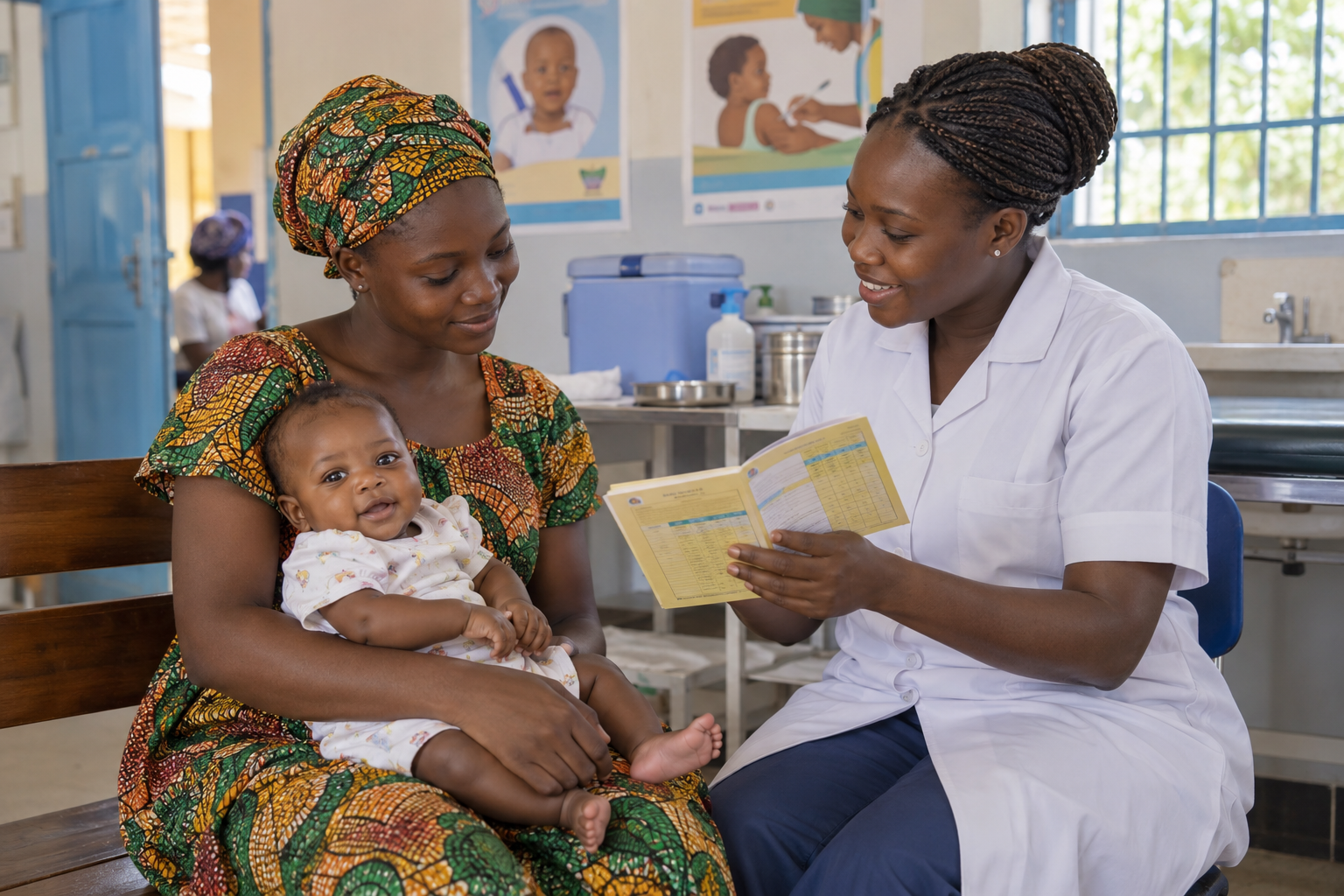
    Across The Gambia, health workers are helping more children receive the life-saving vaccines they need to grow up healthy and protected from preventable diseases.

    At Serekunda Health Centre, first-time father Haruna Darboe watched as a health worker weighed his three-month-old daughter and gave her routine vaccinations. For Haruna, the visit brought reassurance that his baby was receiving the protection she needed.

    Between January 2025 and March 2026, six nationwide vaccination drives reached thousands of children. More than 103,000 pentavalent vaccine doses, 76,000 measles-rubella doses and 108,000 oral polio vaccine doses were delivered across the country.

    Health workers are also improving the way they identify children who miss appointments and follow up with their families. In 2026, another 47,208 HPV vaccine doses were delivered to adolescent girls, helping protect them from cervical cancer later in life.

    This is what positive change looks like: dedicated health workers, informed parents and strong partnerships working together to protect children—one family and one vaccination at a time.

    Original source: WHO Regional Office for Africa – How Gavi’s Support Is Helping The Gambia Reach Every Child with Life-Saving Vaccines

    https://www.afro.who.int/countries/the-gambia/news/beyond-numbers-how-gavis-support-helping-gambia-move-towards-reaching-every-child-life-saving

    Featured image: AI-generated illustration created for MyHappyAfrica.

  • Drones and AI Join Ghana’s Fight Against Malaria

    Drones and AI Join Ghana’s Fight Against Malaria

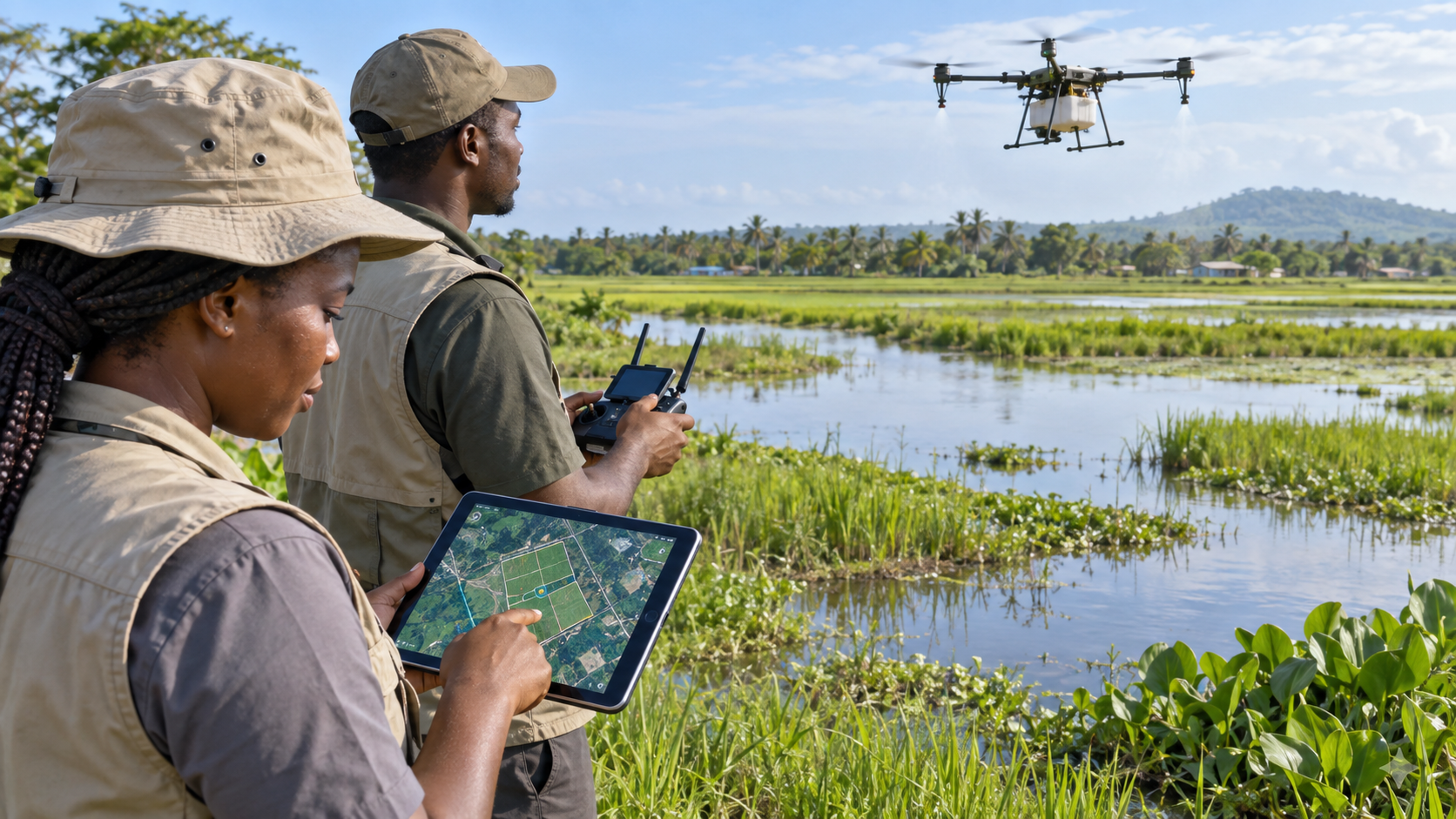
    In Ghana’s Ada East District, researchers are testing how drones, artificial intelligence and digital mapping can improve malaria prevention in hard-to-reach communities.

    Wetlands, lagoons and rice fields in the district create favourable conditions for mosquitoes to breed. Finding and treating these areas using conventional methods can be extremely time-consuming. According to the project team, two workers may need up to 10 days to cover just one kilometre of mosquito-breeding habitats.

    The new approach uses drones to map the landscape, while AI-assisted analysis helps identify places where mosquitoes may be breeding. The drones can then spray larvicide on the mapped locations in under an hour—a task that could take field workers several days using conventional methods.

    The pilot study brings together Ghana’s National Malaria Elimination Programme, UNDP’s Access and Delivery Partnership, SORA Technology and the WHO-supported TDR programme. Their goal is to discover whether this technology can strengthen routine malaria prevention in Ghana and other hard-to-reach settings.

    This is what positive change looks like: African health experts combining local knowledge with modern technology to protect communities, save time and make malaria prevention more effective.

    Original source: WHO/TDR – Harnessing drones and AI to combat malaria in Ghana

    https://tdr.who.int/newsroom/news/item/21-07-2026-harnessing-drones-and-ai-to-combat-malaria-in-ghana